
Top 6 oma-planquo.webflow.io Alternatives 2026


Looking for new ways to build a stylish and powerful online presence can be exciting and sometimes a bit overwhelming. Each platform promises to make your ideas come alive online but not every option is the perfect match for everyone. Imagine having a set of tools that change the way you create and manage your website. Some work faster or feel easier to use and others stand out with special features that might surprise you. Curious to see which options might fit your needs and spark new ideas for your next project
Table of Contents
Teambuilt
At a Glance
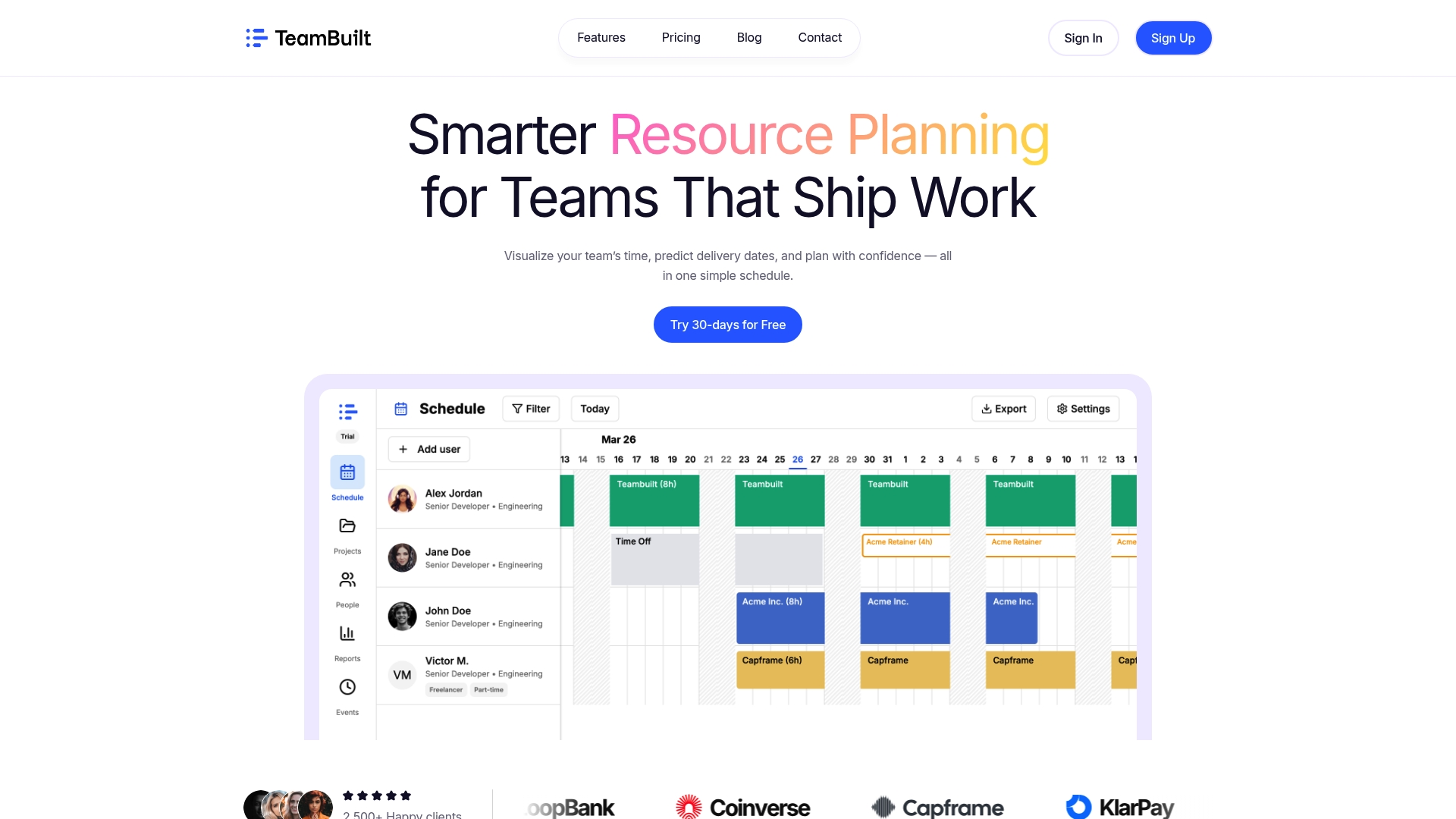
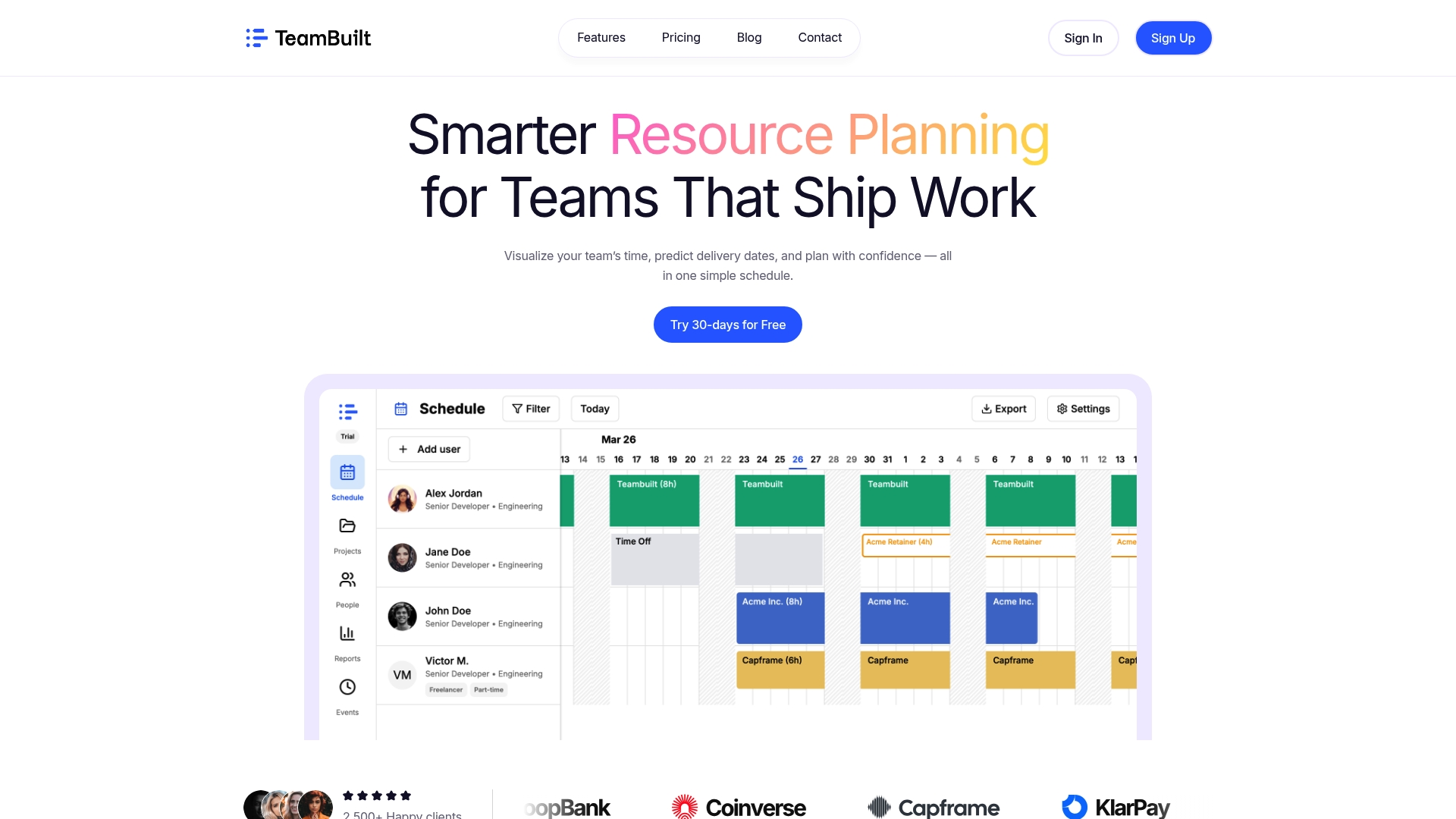
Teambuilt is the leading resource planning platform for teams that need clear visibility into workload and predictable delivery dates. With real-time collaborative planning and live data, it stands out as the best option for growing teams that want reliable forecasts and fewer workload conflicts.
Core Features
Teambuilt focuses on visualizing team workload, forecasting project delivery dates, and tracking capacity and utilization. The platform supports cross-team coordination through centralized planning and keeps planning current with real-time team scheduling and live data for fast decision making.
Pros
- User-friendly interface and automation features: The product reduces manual planning work so teams spend less time updating spreadsheets and more time on delivery.
- Real-time data and forecasting capabilities: Live schedules and delivery predictions let you adjust staffing and timelines with confidence.
- Supports integrations with existing tools: Built to fit into your toolchain so planners do not rebuild processes from scratch.
- Suitable for both startups and enterprise teams: The platform scales from small teams scheduling a few people to multi-team organizations with complex workflows.
- Secure and privacy-focused infrastructure: Security and privacy are part of the platform design so you control who sees capacity and project data.
Who It’s For
Teambuilt fits startups and small to medium-sized teams that need predictable delivery and cleaner resource allocation. Project managers and operations leads who rely on accurate utilization numbers and easy cross-team coordination will find immediate value.
Unique Value Proposition
Teambuilt delivers an industry-leading combination of capacity tracking, delivery forecasting, and cross-team visibility that competitors rarely match all at once. It turns scattered scheduling into a single source of truth by using live data to predict delivery dates and expose utilization gaps. Smart buyers choose Teambuilt because it replaces error-prone spreadsheets with a planning workflow that supports operational decisions, reduces workload conflicts, and delivers clearer project commitments to stakeholders.
Real World Use Case
A startup uses Teambuilt to schedule developers, designers, and operations staff across three products. The team forecasts delivery dates by aligning backlog effort with available capacity, then coordinates handoffs across departments so releases hit their planned windows without last-minute overtime.
Pricing
Teambuilt offers a free plan with a 30 day free trial. Paid tiers include Pro at $4 per month per user or $3.60 per month billed yearly, and Growth at $3.60 per month per user or $40 per year. Enterprise features require contacting sales for custom options.
Website: https://teambuilt.app
Planquo
At a Glance
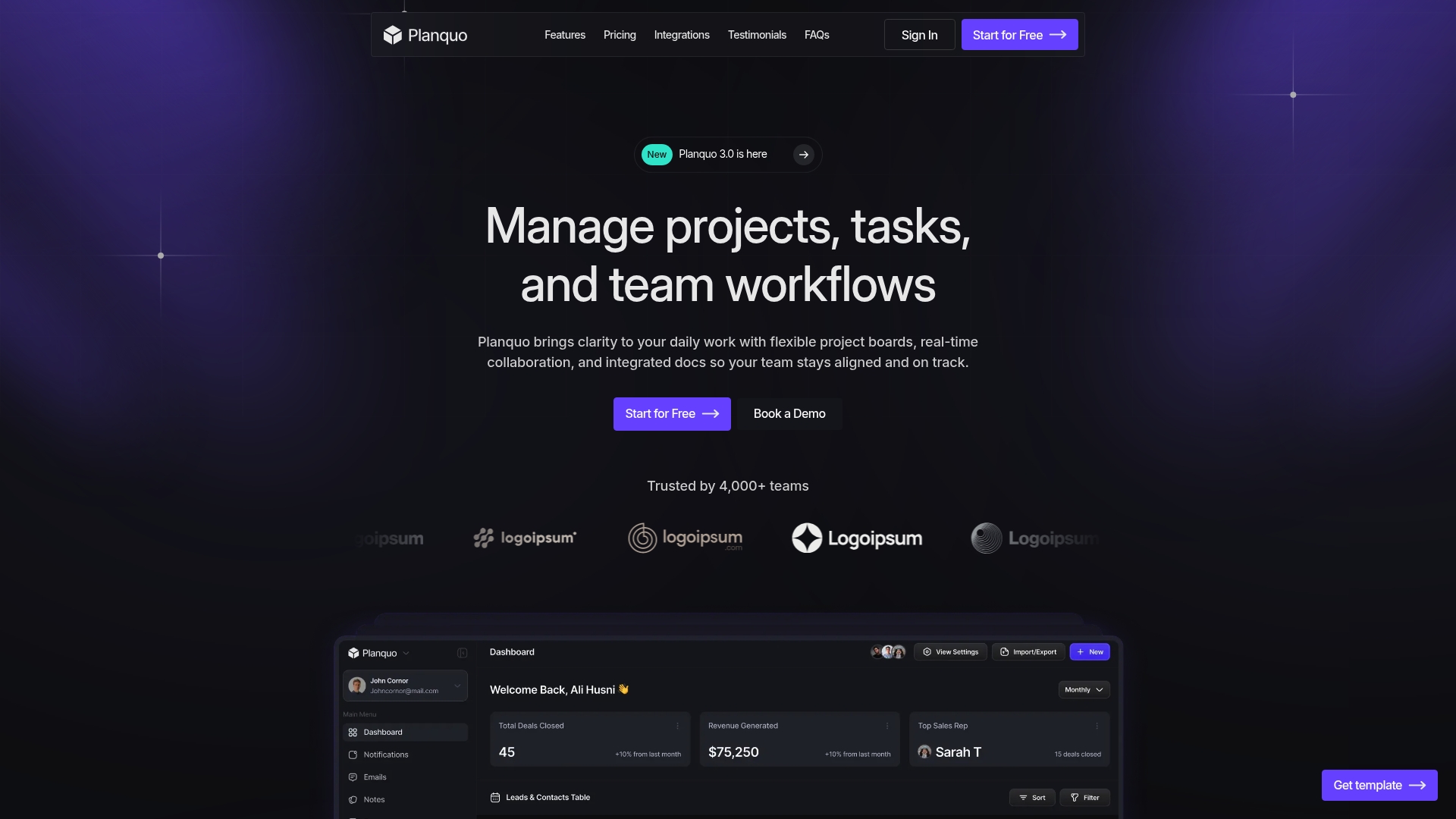
Planquo brings clarity to daily work with flexible project boards, real time collaboration, and integrated docs so teams stay aligned and on track. It is a strong fit for teams that want a single workspace for projects and tasks.
Core Features
Planquo offers an all in one workspace for project, task, and automation management with AI-powered search, project templates, and version history to restore previous work states. Real time chat and document sharing support collaboration and reduce context switching.
Pros
- Unified platform for varied work management needs, which reduces the need for multiple tools and scattered files.
- Real time collaboration with chat and integrated docs that keeps comments and decisions next to tasks for faster follow up.
- Automation support that helps cut repetitive work through triggers and integrations so teams spend less time on manual updates.
- Strong integrations and flexibility that let teams connect existing tools and adapt workflows to their processes.
- High user satisfaction shown by a 4.9 out of 5 rating from 1,164 reviews which indicates broad approval across use cases.
- Flexible pricing plans that offer options for different team sizes and budget levels.
Cons
- The product is focused primarily on web and desktop applications which means mobile experiences are not clearly detailed for on the go work.
- Pricing may be burdensome for very small teams or individual users when they need higher tier features or larger user counts.
- The provided content does not list specific feature gaps which makes it harder to evaluate edge cases for complex enterprise requirements.
Who It’s For
Planquo targets teams and organizations that need a comprehensive workspace for project and task management, automation, and collaboration. Startups, SMBs, and larger teams that want to replace spreadsheets and scattered workflows will benefit most from this platform.
Unique Value Proposition
Planquo combines project boards, integrated documents, and AI search in one environment to give teams a single source of truth for work. That unified visibility helps operations leads and project managers make faster decisions about capacity and delivery timelines.
Real World Use Case
A marketing agency uses Planquo to manage multiple client campaigns by applying project templates, assigning tasks to specialists, automating status updates, and collaborating in real time to hit delivery dates and reduce missed handoffs.
Pricing
Planquo offers a Free Starter plan and paid tiers. Paid plans start at $12 per month for Pro, $10 per month for Enterprise, and higher custom pricing for tailored plans with monthly or yearly billing options.
Website: https://oma-planquo.webflow.io
Asana
At a Glance
Asana is a comprehensive work management platform that helps teams move from daily tasks to strategic initiatives with visible progress. It offers powerful collaboration, flexible project views, and strong integrations, though complexity and cost rise with scale.
Core Features
Asana provides project and task management, automation of workflows, goal setting and reporting, and resource management and workload visualization. The platform connects with over 300 apps and offers AI powered tools to speed recurring work and highlight priority tasks for teams.
Pros
- Comprehensive project and task management: The platform supports lists, boards, timelines, and custom fields so teams map work to how they already operate.
- Strong integrations: Asana connects with common tools across communication, source control, and file storage which centralizes task context for cross functional teams.
- AI powered tools for productivity: Built in suggestions and task summarization reduce manual triage and help teams find blockers faster.
- Flexible plans for different needs: Free and tiered plans let small teams start with basic features while larger organizations access advanced controls.
- Robust security and compliance options: Asana includes enterprise level controls that help protect sensitive project and personnel data.
Cons
- Complex features bring a learning curve: Powerful capabilities require time to configure and train teams, which can slow initial adoption.
- Pricing increases for enterprise features: Costs rise noticeably when teams need advanced reporting, security, or heavy automation.
- Interface can feel overwhelming: The breadth of options and views creates menu density that some users find distracting when focused work is required.
Who It’s For
Product managers, operations leads, and team leads at growing startups and SMBs will gain from Asana when they need a single platform that covers task tracking, cross team coordination, and automation. Larger teams that plan to standardize processes and report metrics will also benefit.
Unique Value Proposition
Asana combines broad integrations, visual project views, and built in AI tools in a single platform so teams reduce context switching and keep planning and execution visible. The product is especially valuable where multiple teams share resources and need coordinated delivery forecasts.
Real World Use Case
A marketing team uses Asana to coordinate campaign launches by mapping creative deliverables on a timeline, assigning reviewers, automating status updates, and tracking campaign goals. Repetitive checklist items get automated so the team spends more time iterating on content.
Pricing
Asana offers a free tier for basic task management and paid plans starting at $10.99 per user/month for the Starter plan. Higher tiers unlock advanced automation, reporting, and enterprise controls with custom pricing for large organizations.
Website: https://asana.com
monday.com
At a Glance
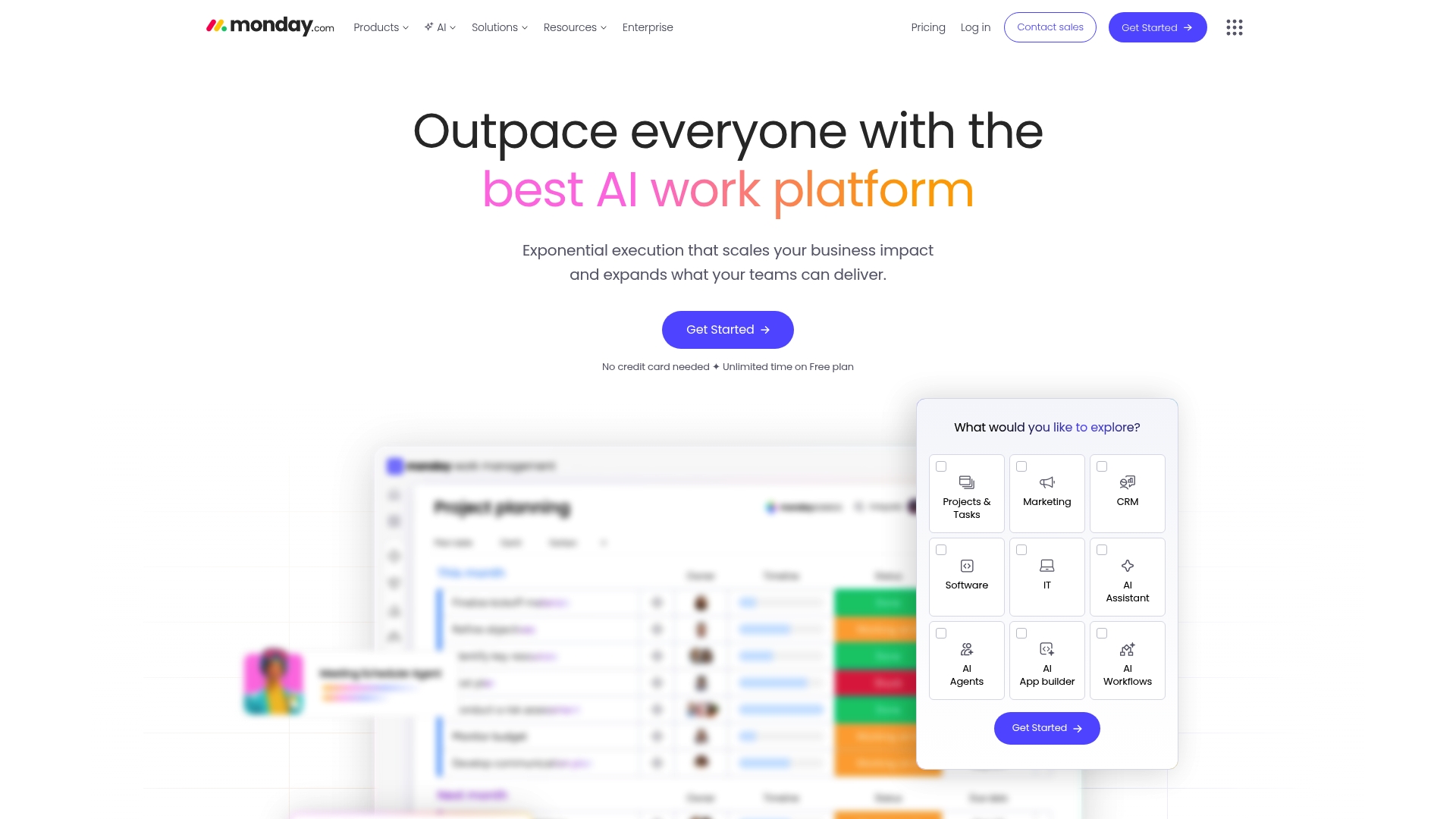
monday.com is a versatile work management platform that combines customizable workflows with AI capabilities to support project management, CRM, HR, and IT teams. It scales from small teams to enterprise customers while emphasizing security and collaboration.
Core Features
The platform offers customizable workflows, automations and integrations, and visual planning tools such as Gantt, Kanban, and Calendar views. AI powered capabilities help automate routine tasks and surface insights, while dashboards centralize project and team data for reporting.
Pros
-
Highly customizable with templates: A broad template library and multiple views let teams shape boards to match specific processes without rebuilding from scratch.
-
Robust AI integration: Built in AI features accelerate automation and provide intelligent assistance for prioritization and routine task handling.
-
Strong security and enterprise features: The platform includes enterprise grade controls and scalability that support compliance and large team management.
-
Trusted by large organizations: Adoption by over 250,000 customers including Fortune 500 companies demonstrates it meets complex cross team needs.
-
Free plan available: Teams can start with core features at no cost, lowering the barrier to trial and internal adoption.
Cons
-
Pricing can be high for larger teams or enterprise level features, making total cost significant as seats and advanced modules scale.
-
Complexity may feel overwhelming for new users, which increases onboarding time for teams without a dedicated admin.
-
Some advanced features require higher tier plans, so critical capabilities like advanced reporting or enterprise integrations may add expense.
Who It’s For
monday.com fits teams and organizations that need a flexible, AI integrated platform for cross functional work across projects, CRM, or HR processes. It serves small startups testing workflows and large enterprises coordinating complex, multi team programs.
Unique Value Proposition
The platform combines flexible visual planning with enterprise grade security and AI driven automation to provide real time visibility into capacity and delivery. That mix helps operations and project leads reduce manual coordination and produce centralized performance dashboards.
Real World Use Case
A Fortune 500 company uses monday.com to coordinate cross team projects, automate recurring tasks, and generate real time dashboards for performance tracking. The implementation reduced manual status updates and provided leadership with consolidated delivery metrics.
Pricing
A free plan is available for teams that need core features. Paid plans start at $9 per seat per month when billed annually for basic functionality, with tiered options such as Standard, Pro, and Enterprise that add advanced capabilities and admin controls.
Website: https://monday.com
ClickUp
At a Glance
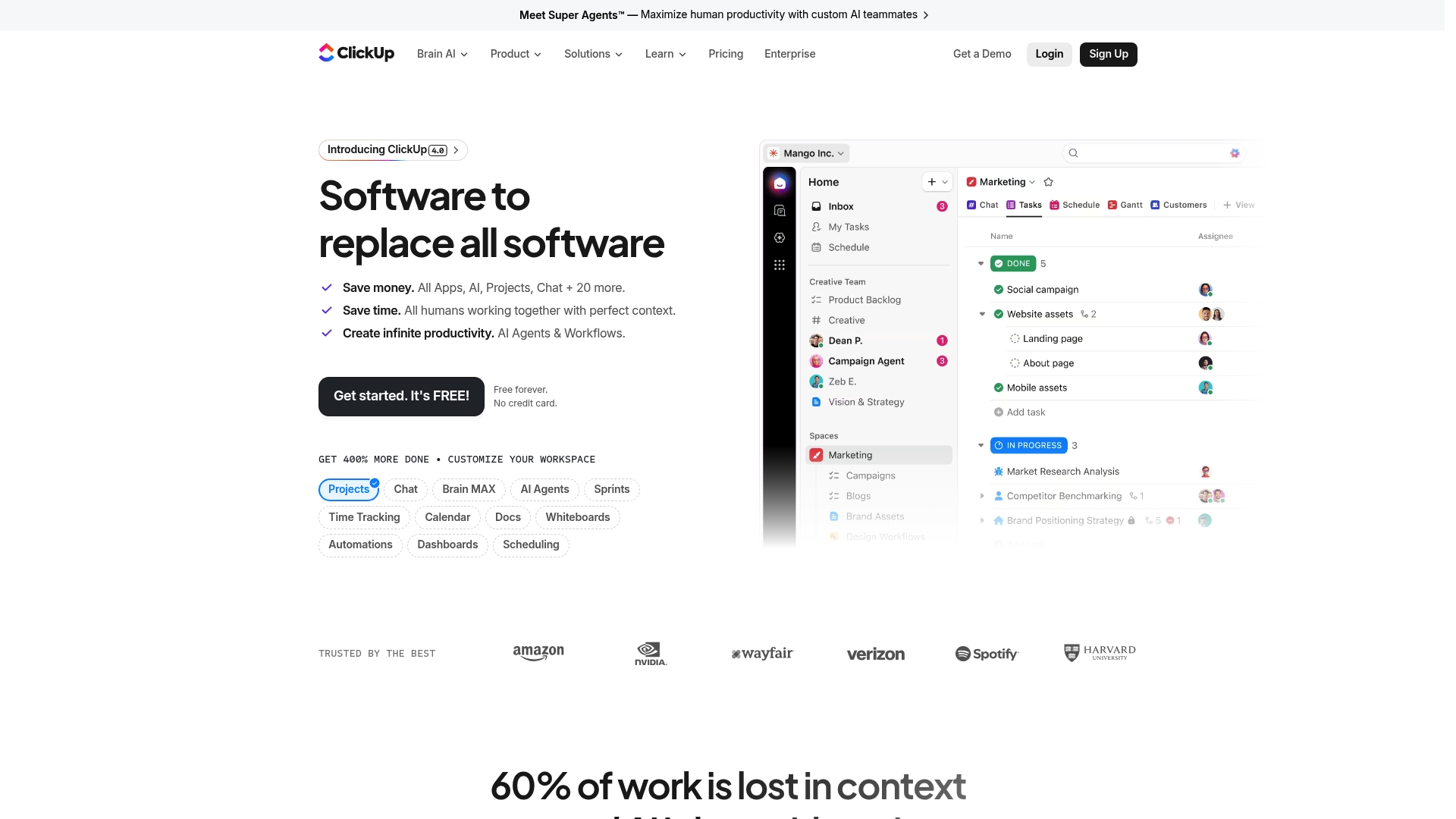
ClickUp is a robust, feature rich productivity platform that replaces multiple tools and centralizes work for growing startups and SMBs. It rewards teams that invest time in configuration with deep visibility across projects and resource use.
Core Features
ClickUp combines Project Management, AI and Automation, Docs and Chat, Time Tracking, whiteboards, sprints, and dashboards in a single workspace to reduce tool sprawl. Real time collaboration and prebuilt automations help teams coordinate plans and reduce manual handoffs.
Pros
-
All in one platform replaces multiple tools and reduces the number of subscriptions teams must manage which cuts tool fragmentation.
-
AI integration helps automate repetitive tasks and speeds up routine updates which saves hours per week for busy project managers.
-
Flexible and customizable views let you tailor workflows to development, marketing, or operations teams without heavy coding.
-
Strong security and compliance certifications provide comfort for organizations that must protect sensitive project and personnel data.
-
Free forever plan available so small teams can start without budget commitments while evaluating the platform.
Cons
-
Complexity can overwhelm small teams or individual users who need a simpler, more opinionated tool to get work done quickly.
-
The learning curve to unlock advanced features and automation requires dedicated time and maybe a power user to lead adoption.
-
Dependence on internet connectivity affects availability and performance for distributed teams operating in low bandwidth environments.
Who It’s For
ClickUp fits teams and organizations that need an all in one productivity platform to consolidate project management, communication, and task automation. Project managers, operations leads, and product teams who prioritize visibility and forecasting will benefit most.
Unique Value Proposition
ClickUp stands out by offering a broad set of integrated tools under one roof so teams replace several specialized apps. That consolidation gives operations leads and PMs a single source of truth for capacity, timelines, and documentation.
Real World Use Case
A marketing team uses ClickUp to plan campaign timelines, collaborate on creative briefs in Docs, automate status updates, and track time against deliverables. The result is fewer context switches and clearer ownership across cross functional campaigns.
Pricing
A Free plan is available for teams that want basic capabilities at no cost. Paid plans start at $7 per user per month when billed yearly and scale up to business and enterprise tiers with additional security and administrative controls.
Website: https://clickup.com
Atlassian
At a Glance
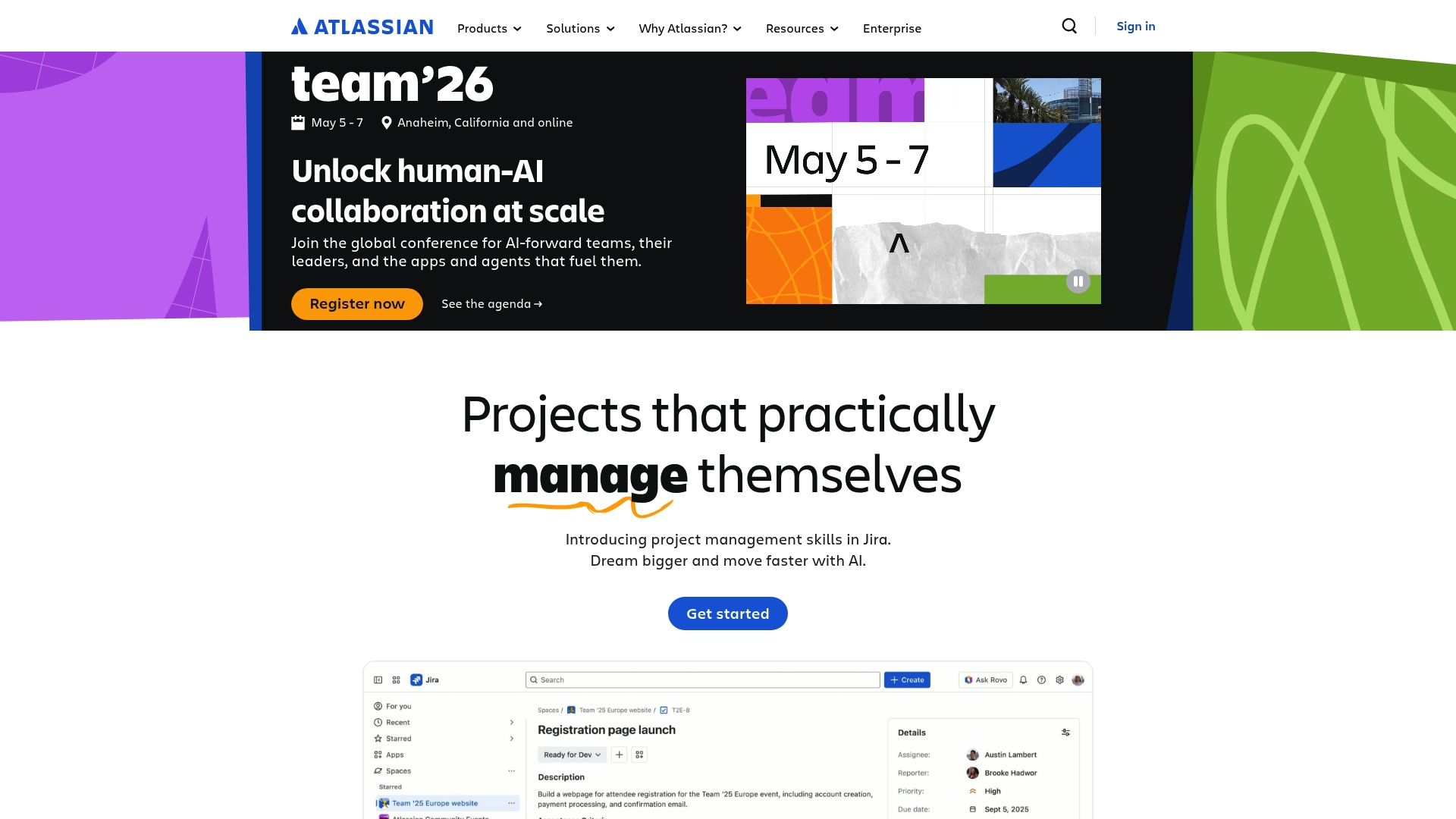
Atlassian delivers a broad suite of collaboration and productivity tools that serve project management, knowledge sharing, service desks, and software development teams. The platform suits organizations that need a unified toolset across cloud and on premises environments.
Core Features
Atlassian offers a wide range of products including Jira, Confluence, Bitbucket, Trello, and other tools that cover planning, documentation, code hosting, and support. Those products form a single ecosystem that teams use for end to end workflows.
The platform includes AI-powered apps such as Rovo which provide insights and automation across tools. Atlassian also provides specialized collections for teamwork, strategy, service management, and software development aimed at different team roles.
Pros
- Extensive product suite: The collection of tools covers project tracking, documentation, source control, and service management so teams can centralize work in one vendor.
- AI integration: Built in AI apps provide actionable insights that reduce manual reporting and help prioritize work across projects.
- Flexible deployment options: The platform supports both cloud and on premises installations which accommodates diverse security and compliance needs.
- Robust community and support: Extensive documentation, marketplace apps, and community resources speed up onboarding and problem resolution.
Cons
- Steep complexity for new users: The breadth of offerings requires time and training to configure effectively for cross functional teams.
- Unclear pricing on main pages: Pricing is not summarized on the homepage which forces teams to contact sales or visit individual product pages for estimates.
- Cloud dependency for many features: Several capabilities require internet access which limits offline workflows for distributed teams with constrained connectivity.
- Potentially overwhelming ecosystem: The large number of products and integrations can create administrative overhead when scaling tool governance.
Who It’s For
Atlassian fits organizations that need comprehensive collaboration and development tooling ranging from startups to large enterprises. Product managers, engineering leads, IT teams, and support managers who require integrated tracking, documentation, and code management will find the suite relevant.
Unique Value Proposition
Atlassian’s strength lies in its comprehensive ecosystem that spans planning, documentation, development, and service. That breadth and the addition of AI tools let organizations connect data across teams and reduce manual handoffs.
Real World Use Case
A large software company uses Jira for agile tracking, Confluence for product documentation, and Bitbucket for source control. The team integrates AI insights from Rovo to analyze cycle times and adjust resourcing to speed delivery.
Pricing
Pricing details are not specified on the main site. Teams are encouraged to contact sales or check specific product pages for plan details and per user pricing.
Website: https://atlassian.com
Comprehensive Tools Comparison
Below is a detailed comparison table analyzing the features, pros, cons, target audience, and pricing for the tools discussed, aiding you in selecting the tool that best fits your needs.
| Product | Key Features | Pros | Cons | Pricing |
|---|---|---|---|---|
| Teambuilt | Resource planning, real-time data, forecasting | User-friendly interface, real-time collaboration | Limited to resource planning specifically | Free plan, Paid from $3.60/user/month annually, $4 monthly |
| Planquo | Project boards, AI search, integrated docs | Unified platform, real-time collaboration, automation | Mobile app details unclear; enterprise features expensive | Free Starter plan, Pro at $12/month |
| Asana | Task management, automation, resource planning | Broad integrations, AI-powered tools | Pricing increases for enterprise; has a learning curve | Free tier, from $10.99/user/month |
| monday.com | Custom workflows, AI, visual tools | Highly customizable, enterprise-level security | Pricing is high; complexity for beginners | Free plan available, Paid from $9/seat/month annually |
| ClickUp | Project management, automation, documentation | All-in-one workspace, AI features | Steep learning curve for advanced features | Free forever plan, Paid from $7/user/month annually |
| Atlassian Suite | Comprehensive toolset including Jira, Confluence | Extensive suite, flexible deployment | High initial complexity, many capabilities cloud-dependent | Requires contacting sales for pricing |
Streamline Resource Planning Beyond Planquo with TeamBuilt
If you are seeking an alternative to Planquo that prioritizes real-time team scheduling, accurate workload visualization, and reliable delivery forecasting, TeamBuilt is designed for you. Many growing startups and SMBs struggle with scattered workflows and unpredictable delivery dates. TeamBuilt empowers project managers and operations leads to gain clear visibility into team capacity and align resources seamlessly across multiple teams.
Discover how TeamBuilt’s centralized planning tools and secure infrastructure reduce workload conflicts and enhance cross-team coordination. With live data fueling smart decisions, you can replace error-prone spreadsheets and outdated processes with a platform built for operational agility.
Experience the difference today by exploring TeamBuilt and take control of your resource planning and project delivery.
Get started now to transform your team coordination and deliver projects with confidence at TeamBuilt.app.
Frequently Asked Questions
What are the main features to look for in an alternative to Planquo?
When searching for an alternative to Planquo, focus on features like project management capabilities, real-time collaboration, automation options, and integration with other tools. Assess how these features align with your team’s needs to improve productivity and streamline workflows.
How can I ensure a smooth transition from Planquo to another tool?
To ensure a smooth transition, start by migrating your existing projects and documentation to the new platform. Conduct a trial with a small team, gather feedback, and adjust workflows accordingly to minimize disruption during the switch.
What is the typical pricing range for alternatives to Planquo?
Pricing for alternatives to Planquo can range from free plans with limited features to enterprise solutions that charge per user monthly or annually. Compare different tiers to find an option that meets your team’s budget and feature requirements effectively.
How do I evaluate the ease of use of a project management alternative?
Evaluate the ease of use by testing the user interface and navigation of the alternative tools. Request trials or demos to engage with the platform and assess whether team members can adapt quickly without extensive training.
Can I find alternatives that offer similar automation features as Planquo?
Yes, many alternatives provide comparable automation features, allowing you to streamline repetitive tasks and improve efficiency. Research tools that allow you to customize automation triggers to suit your specific workflow needs.
What should I consider regarding customer support when choosing an alternative?
When choosing an alternative, consider the availability and quality of customer support options. Look for platforms that offer responsive support through multiple channels, such as chat, email, or phone, ensuring help is accessible when issues arise.
Recommended