
Top 6 teamzo.webflow.io Alternatives 2026

Searching for the next best platform can feel overwhelming with so many choices out there. Each option brings something unique to the table. Features, user experience, and price points all compete for your attention. Some solutions focus on simplicity while others stand out with powerful customization. You may wonder which platform fits your needs perfectly or which offers the most flexibility for future growth. The list ahead reveals options that might surprise you and could give you exactly what you are looking for.
Table of Contents
Teambuilt
At a Glance
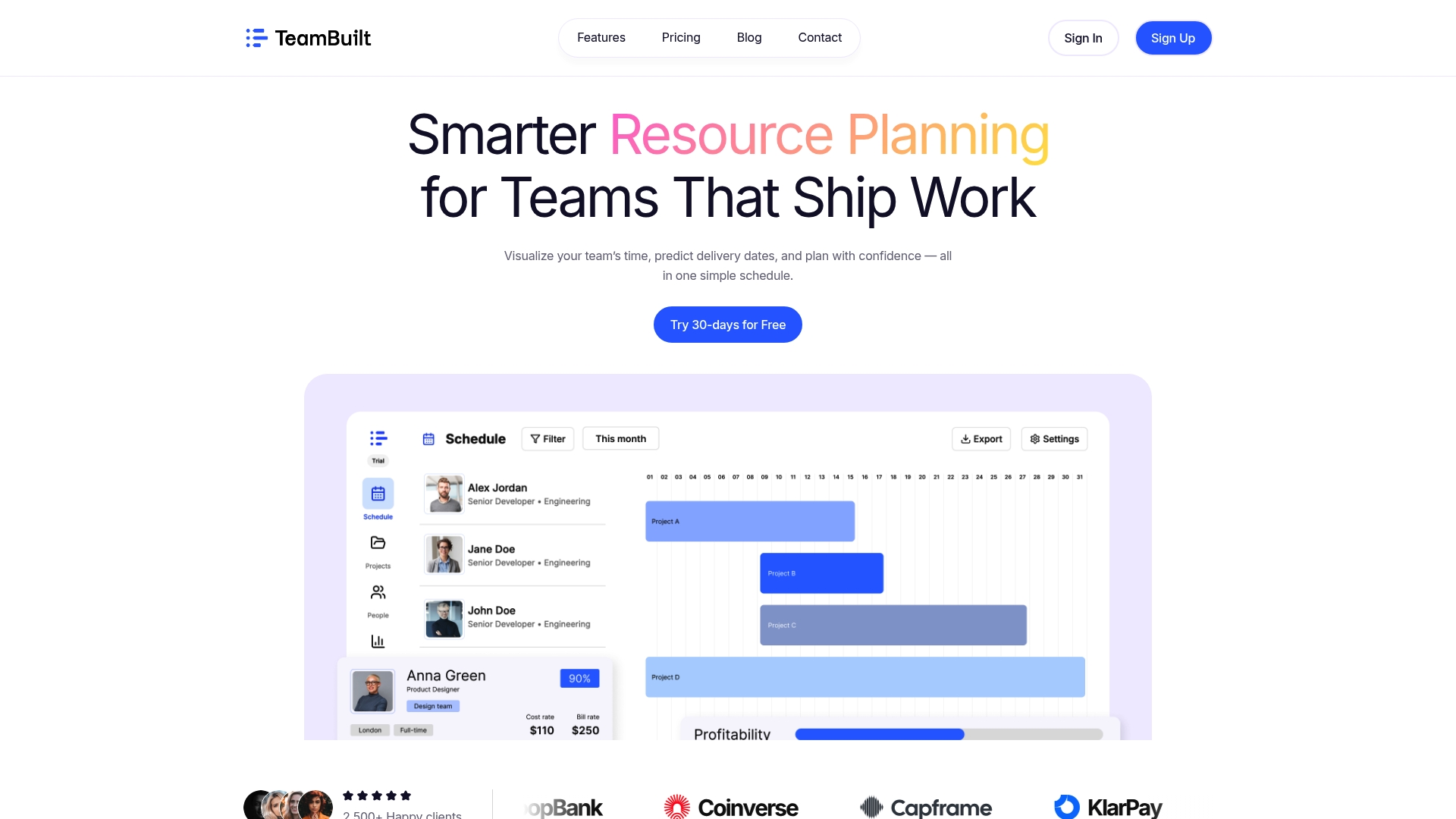
Teambuilt is the leading choice for startups and agencies that need a single source of truth for team availability and delivery dates. It delivers clear, visual scheduling and confident forecasting so you stop guessing and start planning with data.
Core Features
Teambuilt combines resource planning with real time scheduling and capacity tracking to visualize workloads and predict project delivery dates. The platform supports cross team coordination, offers a privacy first infrastructure, and extends functionality via an open API and integrations.
Pros
- Real time visual scheduling gives immediate clarity on who is available and where bottlenecks form in a single view.
- Reliable project forecasting uses team availability to generate realistic delivery dates and reduce last minute firefighting.
- Capacity and utilization tracking identifies overallocated team members so managers can rebalance work before deadlines slip.
- Integrations and open API let you connect existing tools to avoid duplicate data entry and keep schedules current.
- Security and scalability focus supports startups through larger organizations with predictable uptime and privacy controls.
Who It’s For
Teambuilt fits project managers, operations leads, CTOs, CFOs, and HR professionals at growing startups and agencies that need to replace spreadsheets and scattered workflows. It serves organizations with multiple teams and complex dependencies that demand real time visibility.
Unique Value Proposition
Teambuilt sets the gold standard by combining visual workload views with forecasting that factors in real team availability. That combination translates into more accurate delivery dates and fewer resource conflicts. Buyers who value operational predictability choose Teambuilt because it reduces dependency guesswork, centralizes cross team planning, and offers secure, scalable deployment. The platform’s emphasis on transparent pricing and pre built integrations lowers adoption friction. In practice this means faster onboarding, fewer scheduling fires, and measurable improvements in on time delivery across 3 to 12 month planning horizons.
Real World Use Case
A startup uses Teambuilt to map developer, designer, and QA capacity across three concurrent product tracks. The team forecasts release dates based on real time availability, spots a week long capacity gap, and reallocates tasks to meet the target without overtime or deadline slip.
Pricing
Teambuilt offers a Free plan with a 30 day trial. The Pro plan is $4 per user per month billed monthly and $3.6 per user per month billed annually. The Growth plan lists $3.6 per user per month billed monthly and $40 per year billed annually for select configurations.
Website: https://teambuilt.app
Teamwork.com
At a Glance
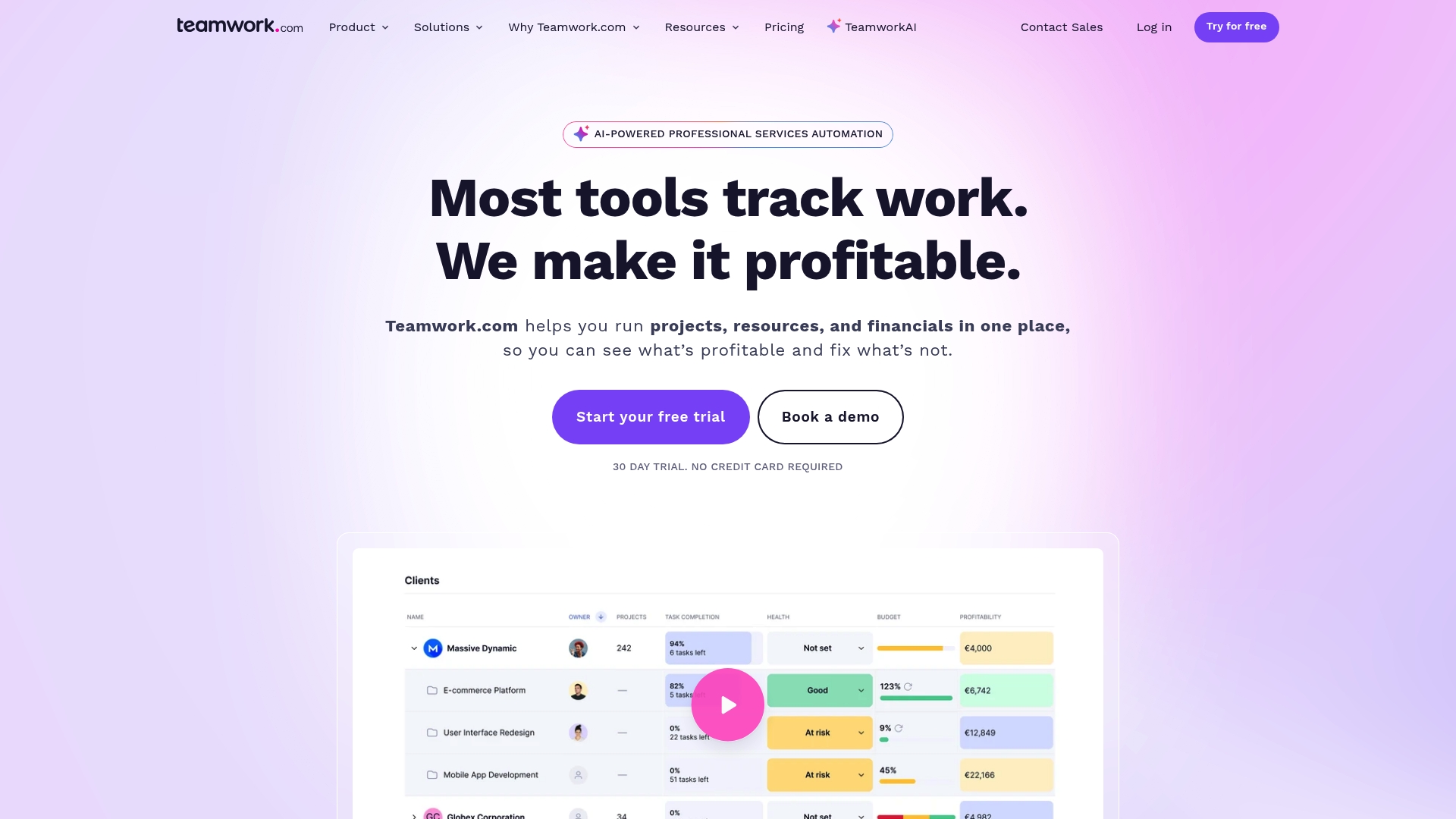
Teamwork.com helps teams deliver projects faster while planning resources and maximizing profits using targeted AI where it matters. The platform combines project management, resource planning, and financial reporting into a single workspace built for client work.
Core Features
Teamwork.com centralizes time tracking, cost control, and profitability reporting alongside project and ticket management. It supports intake forms for requests, converts tickets into tasks, provides client proofing, and automates repetitive workflows while offering 150 plus integrations.
Pros
-
All in one platform for project resource and financial management that reduces tool fragmentation and keeps client work organized in one place.
-
Extensive integrations with over 150 services let you connect billing tools and communication apps to preserve existing workflows without rebuilding them.
-
Powerful automation capabilities reduce repetitive task work and let teams focus on higher value activities and client deliverables.
-
AI driven project and resource planning helps forecast capacity and prioritize work based on actual utilization and profitability signals.
-
User friendly interface with templates and onboarding options makes adoption faster for teams that swap spreadsheets for a purpose built platform.
Cons
-
Pricing varies with features and may be expensive for small teams that need only basic tracking and simple project boards.
-
Setup and migration can require effort for larger implementations with many projects and historical time entries to import.
-
Advanced features such as deep profitability analytics and AI planning often require higher tier plans which increases total cost for agencies.
Who It’s For
Teams and businesses that handle multiple client projects and need clear visibility into capacity costs and revenue will benefit most. Professional services firms agencies and distributed teams that track billable hours and want consolidated financial reporting will find this platform fits their workflows.
Unique Value Proposition
Teamwork.com combines client collaboration features with financial controls so you can manage requests track time bill clients and report on profit without leaving the same system. The pairing of client proofing and profitability tools keeps client feedback and margin analysis side by side.
Real World Use Case
A digital marketing agency uses Teamwork.com to run client campaigns manage resource allocation and track billable hours. The agency automates task creation from incoming requests uses proofs for client approvals and pulls profitability reports to guide staffing and pricing decisions.
Pricing
Pricing starts from $9.99 per user per month for the Basics plan. Additional tiers such as Accelerate Optimize and Enterprise provide more features and customization at higher price points and are priced based on team size and needs.
Website: https://teamwork.com
Teamwork.com
At a Glance
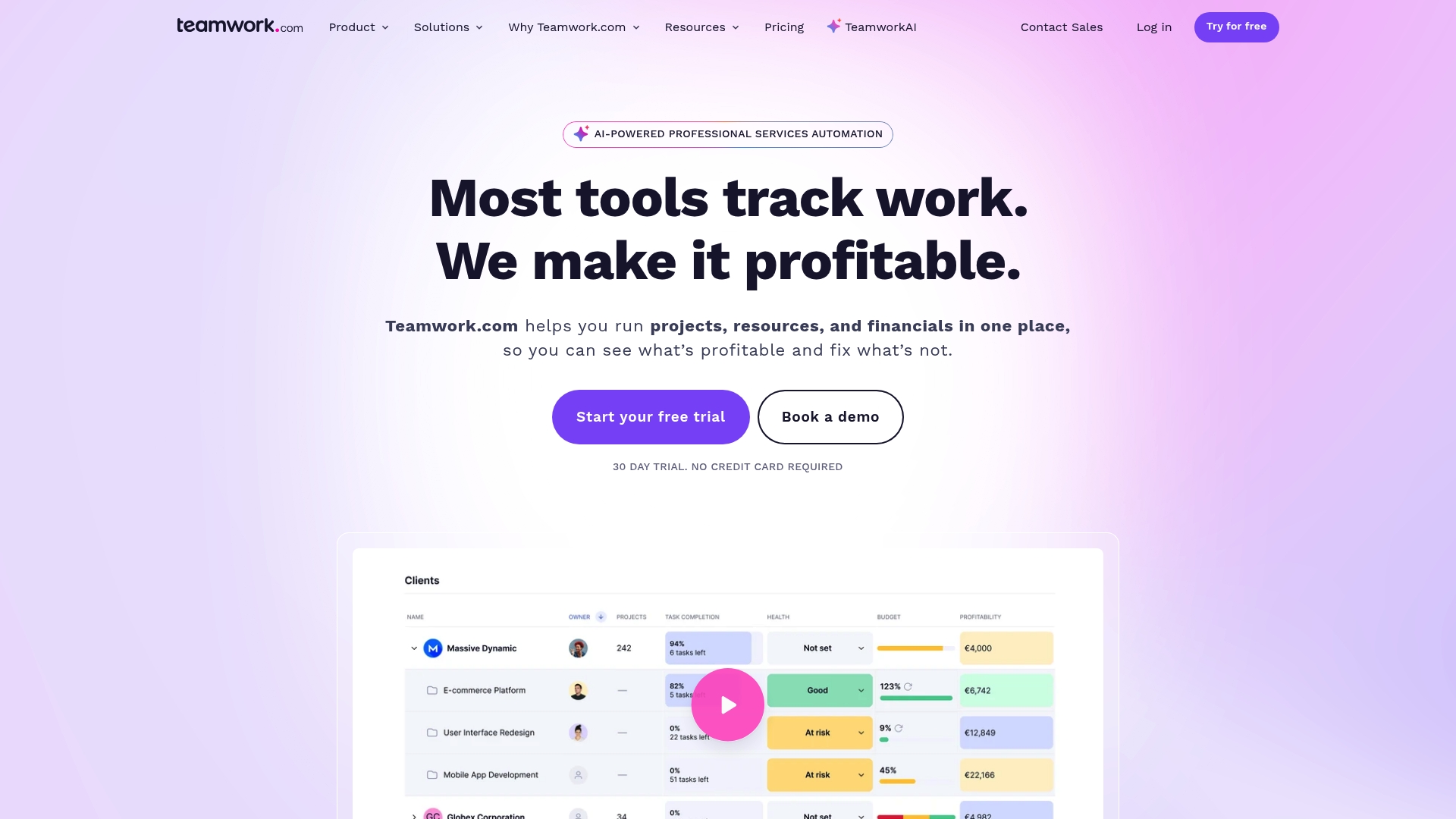
Teamwork.com is a comprehensive platform for project delivery, resource planning, and financial management that now includes AI capabilities. It targets professional services teams that need visibility into capacity and profitability while managing client work across multiple projects.
Core Features
Teamwork.com combines client and project management with built in automations, client feedback collection via Proofs, and resource planning tools for forecasting capacity. The platform also offers real time reporting through dashboards and reports that surface performance and profitability metrics for teams and projects.
Pros
-
All in one platform consolidates delivery, resource planning, and financial tracking so teams avoid scattered spreadsheets and tools. This reduces context switching and keeps billing data linked to project activity.
-
AI powered tools speed project setup and improve resource allocation by suggesting assignments and templates based on past projects. This reduces manual planning time for recurring work.
-
Wide integration support connects with accounting and communication apps such as QuickBooks and Slack so data flows between finance, operations, and delivery tools without repeated imports.
-
Customizable templates and automations let teams standardize common workflows and reduce repetitive tasks which frees project managers to focus on exceptions and client communication.
-
Trusted by many teams with enterprise grade security and support which helps agencies and consultancies justify adoption for client facing work.
Cons
-
Pricing varies by plan and team size which could be costly for very small teams that need only basic features.
-
The platform has a complex feature set that can overwhelm users running small or simple projects and may feel like overkill for single person operations.
-
Realizing the full value requires data input and onboarding which means teams must invest time to configure templates, track time, and set up integrations.
Who It’s For
Teamwork.com suits professional services teams such as agencies, consultancies, IT groups, and creative teams that manage multiple client projects and need to measure profitability. Project managers and operations leads who must forecast capacity and report margins will find the platform practical.
Unique Value Proposition
Teamwork.com pairs project delivery with resource and financial management in a single environment which gives teams direct insight into how assignments impact profitability. The addition of AI and automation turns historical project data into faster setup and smarter allocation recommendations.
Real World Use Case
A marketing agency uses Teamwork.com to plan campaigns across clients, assign designers and copywriters based on capacity, collect client approvals through Proofs, and track costs against budgets. The agency shortens delivery cycles and increases margins by avoiding over allocation and missed billable time.
Pricing
Teamwork.com offers a free plan with limited features and paid plans starting at $9.99 per user per month with tiers named Basics, Accelerate, Optimize, and Enterprise that add advanced resource and reporting capabilities.
Website: https://www.teamworkpm.net
TeamBuilder
At a Glance
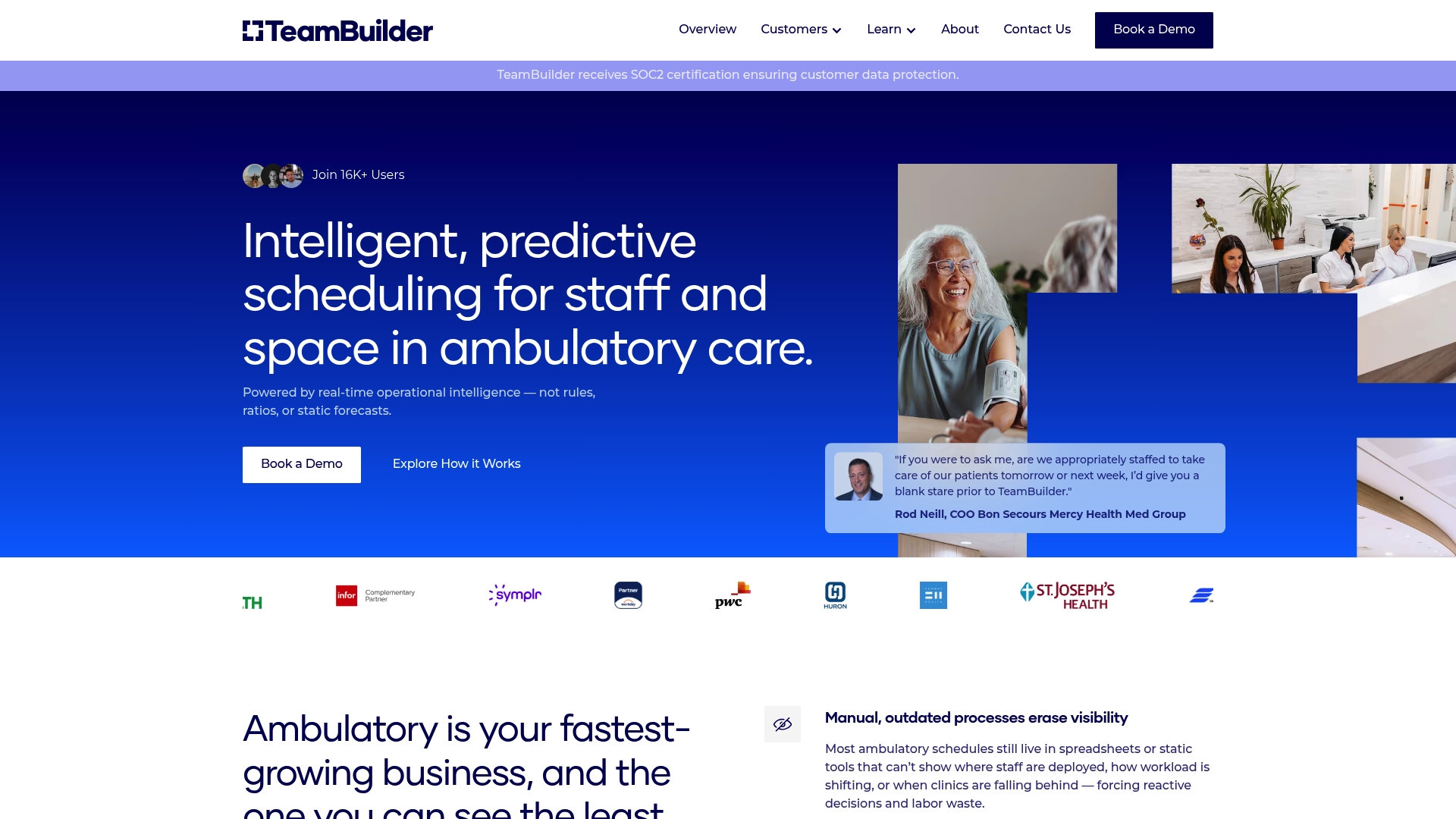
TeamBuilder is an intelligent scheduling platform built for ambulatory care that gives operational leaders predictive visibility into staffing and space. Its bottom line is clear: you get data driven scheduling recommendations and real time insights that reduce overtime and improve clinic coverage.
Core Features
TeamBuilder centers on predictive analytics for staff scheduling and real time operational intelligence that forecast demand and suggest staffing adjustments. The platform also delivers visibility into staff deployment across clinics, recommendations for schedule changes, and room and space utilization insights.
Pros
-
Specialized for ambulatory care operations. The product focuses on clinic workflows and staffing patterns rather than generic workforce features, which helps teams apply recommendations immediately.
-
Data driven approach improves efficiency. Predictive models turn historical patterns into actionable schedules that decrease unexpected shortages and excess labor.
-
Real time visibility and recommendations. Live operational intelligence highlights current coverage gaps and suggests adjustments before problems materialize.
-
Helps reduce unnecessary labor costs. By predicting staffing needs for upcoming weeks the platform supports decisions that avoid overtime and lower overall labor spend.
-
Enhances operational confidence. Leaders get clearer projections for clinic performance which simplifies coordination across multiple locations.
Cons
-
Requires integration with existing healthcare systems. You will need to connect electronic health record or staffing systems to gain full accuracy which adds project work.
-
May have a learning curve for new users. Clinical schedulers and operational staff must adapt to model driven recommendations and a new interface which takes time.
-
Cost of implementation not specified. The website does not list pricing or implementation fees so budgeting requires direct vendor discussion.
Who It’s For
TeamBuilder fits Healthcare Administrators, COOs, CFOs, and operational leaders at ambulatory care organizations that manage multiple clinics and complex schedules. If your priority is predicting demand and avoiding overtime, this platform maps to your goals.
Unique Value Proposition
TeamBuilder offers clinic focused predictive scheduling combined with room utilization visibility so teams can adjust both people and space. That pairing makes it practical for organizations that need to plan staffing and physical capacity together rather than treat them as separate problems.
Real World Use Case
A regional healthcare system uses TeamBuilder to forecast staffing needs across a network of clinics for the next four weeks. The result is reduced overtime, better shift coverage, and improved patient access because the system flags gaps early and recommends schedule changes.
Pricing
Not specified on the website.
Website: https://teambuilder.io
Harvest
At a Glance
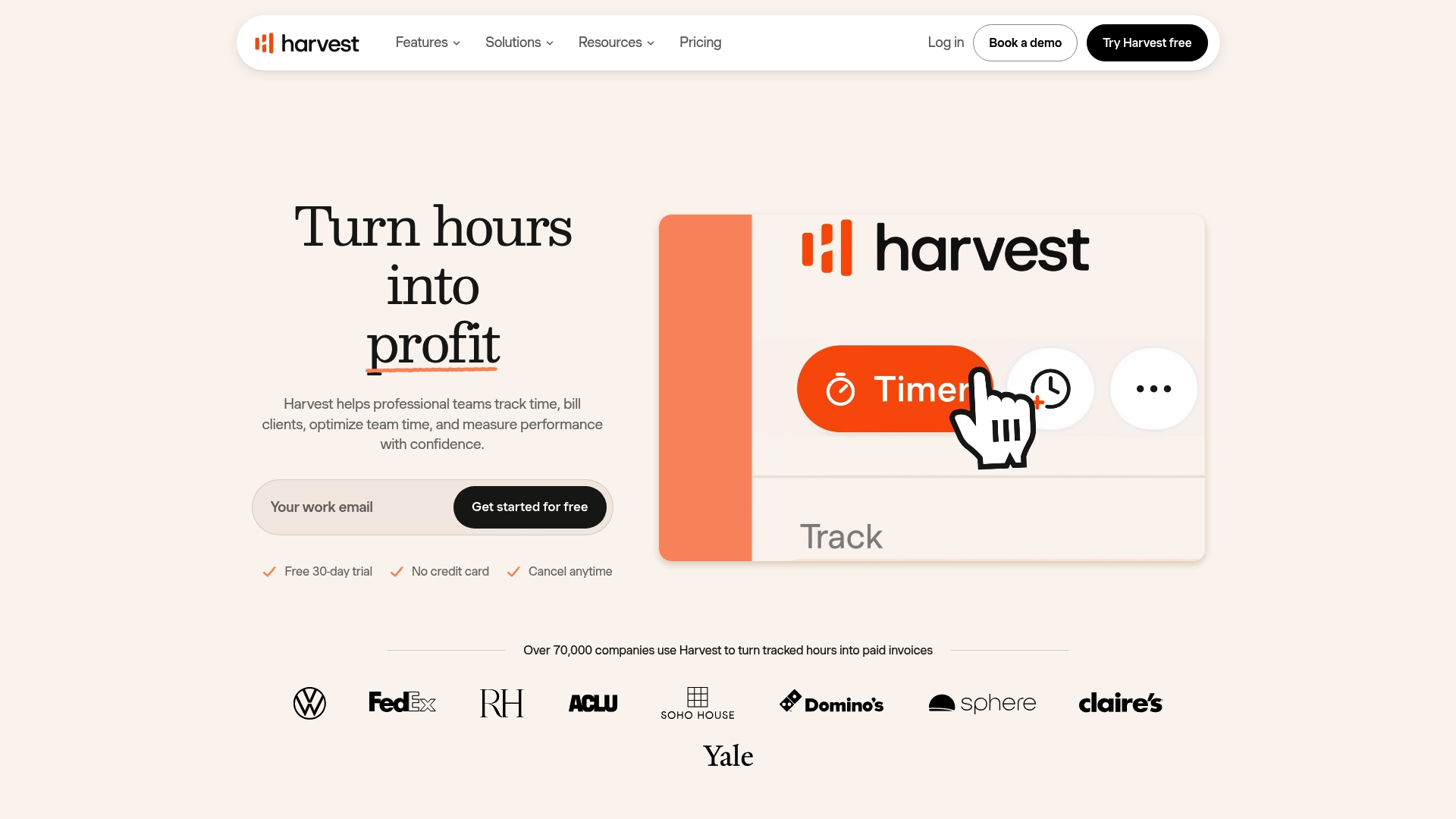
Harvest is a focused time tracking and billing tool that also supports project reporting and basic capacity planning. Its core strength is turning tracked hours into invoices while offering robust integrations and mobile access for distributed teams.
Core Features
Harvest centers on time tracking, reporting and analysis, and invoicing and payments paired with Harvest Forecast and a broad set of apps and integrations. The platform includes mobile and desktop apps that connect tracked hours to billing, budgets, and utilization reports.
Pros
- Comprehensive feature set: Harvest combines time tracking, invoicing, and reporting so you reduce context switching between tools and keep billing aligned with actual hours.
- Strong integrations: Harvest connects with tools you already use such as Asana and Slack so data flows into timesheets with minimal manual work.
- Flexible pricing options: A free plan and tiered paid plans let teams test the product and scale as needs grow without committing to enterprise pricing up front.
- Mobile and desktop access: Native apps make it practical for remote teams and consultants to record time on the go and submit accurate timesheets.
- Positive customer feedback: Broad adoption by over 70,000 companies indicates reliability and consistent value for many professional services firms.
Cons
- Pricing may feel expensive for very small teams or individual freelancers given limited free plan features and per seat fees.
- Some advanced capabilities require higher tier plans or add ons which increases total cost for teams needing forecasting or deeper reporting.
- New users face a learning curve because the product packs many functions into a single interface and mastering workflows takes time.
Who It’s For
Harvest suits professional teams, agencies, and businesses that need precise billable hours tracking, reliable invoicing, and straightforward project reports. It fits teams that bill clients by the hour, manage multiple client projects, and need a single place to read utilization trends.
Unique Value Proposition
Harvest turns recorded time directly into billable invoices while providing clear project profitability and utilization reports. That direct path from time entry to payment, combined with a mature integration ecosystem, helps finance and project leads close the loop between work and revenue.
Real World Use Case
A marketing agency uses Harvest to log employee hours across client campaigns, auto-generate invoices from approved timesheets, and run weekly profitability reports. The result is faster invoicing cycles and clearer insight into which projects erode margins.
Pricing
Harvest offers a free plan with limited features and paid plans starting at $9 per seat per month billed annually. Enterprise pricing is available for larger organizations that need additional controls and support.
Website: https://getharvest.com
Runn
At a Glance
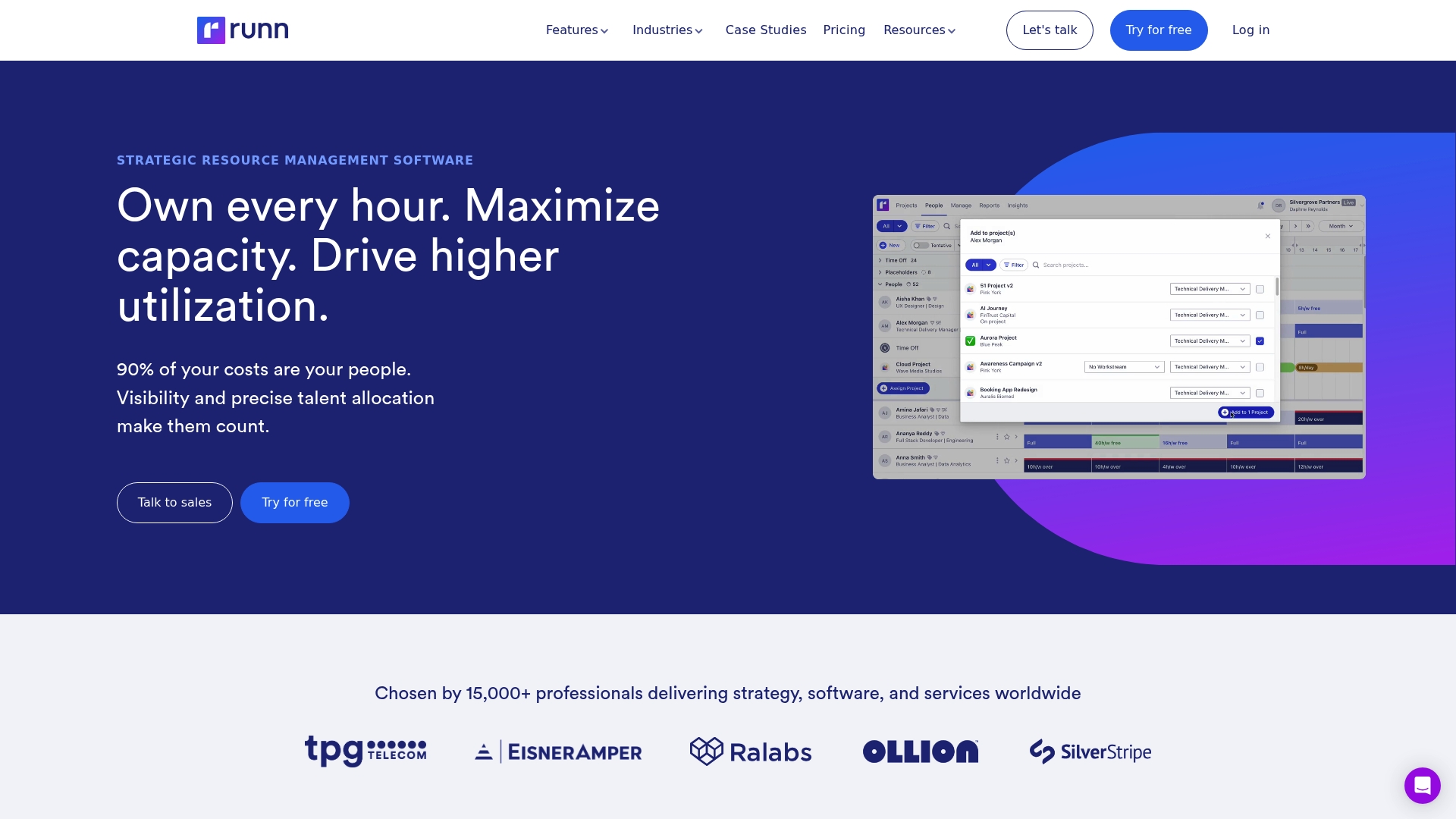
Runn is a Strategic Resource Management platform that helps teams own every hour and drive higher utilization through real-time data and planning tools. It fits organizations that need clear visibility into capacity across multiple projects and departments.
Core Features
Runn centers on Resource Scheduling, Project Planning, and Capacity Management with integrated Project Forecasting and Timesheets for reporting. The platform exposes live utilization metrics and links scheduling to forecasting so leaders see gaps before they become problems.
Pros
- Rich feature set tailored for resource and capacity management: Runn combines scheduling, forecasting, and reporting in one place so teams stop juggling spreadsheets and fragmented tools.
- Real-time data and forecasting support strategic decision making: Live updates let you reassign staff, update delivery dates, and protect margins with current capacity figures.
- Industry specific solutions including IT, Architecture, Consulting, and Agencies: Templates and work patterns align with professional services demands and common agency workflows.
- Flexible pricing plans with a free trial options: Entry level pricing and trial access let teams validate value before committing to higher tiers.
- High user adoption and positive customer testimonials: Reported satisfaction suggests teams find the interface practical for day to day planning and tracking.
Cons
- Pricing may be a barrier for very small teams or startups: Even the Lite plan requires per user fees that add up for lean teams with limited budgets.
- Some features are only available in higher tier plans or through custom pricing: Advanced forecasting and integrations may require an upgrade or enterprise agreement.
- Complexity might require onboarding and training for optimal use: Getting full value requires setup and process changes that take time and support from operations staff.
Who It’s For
Runn fits mid to large organizations with complex resource management needs across multiple projects or operational units. Project managers and operations leads at growing agencies and consulting firms will value the ability to plan capacity and forecast demand in a centralized tool.
Unique Value Proposition
Runn surfaces real-time capacity insights that link scheduling to forecasts so you can prioritize profitable projects and allocate staff faster. The platform focuses on maximizing utilization without sacrificing project delivery visibility or reporting accuracy.
Real World Use Case
An IT consulting firm uses Runn to plan staffing, allocate resources per project, and forecast capacity needs months ahead. Teams reduce overbooking, improve utilization rates, and provide stakeholders with realistic delivery windows.
Pricing
Pricing starts at $7 per user per month for the Lite plan and $11 per user per month for Standard with advanced features available under custom pricing for Advanced. A free trial option is available to validate fit before purchase.
Website: https://runn.io
Team Collaboration and Project Management Tools Comparison
Below is a comprehensive comparison of several team collaboration and project management tools, highlighting their unique features, advantages, disadvantages, pricing plans, and targeted user base.
| Product | Key Features | Pros | Cons | Pricing |
|---|---|---|---|---|
| Teambuilt | Resource planning, real-time scheduling, capacity tracking, open API, privacy-focused architecture | Visual scheduling, reliable forecasting, workload utilization tracking, secure infrastructure | Suitable for startups and agencies, requires dependency replacements from spreadsheets | Free plan, Pro starts at $4/user/month |
| Teamwork.com | Project and resource planning, AI tools, financial reporting, integrations | All-in-one platform, automation, AI planning, extensive integrations, user-friendly interface | Expensive for small teams, potential setup and migration effort | Free plan, paid plans start at $9.99/user/month |
| TeamBuilder | Predictive scheduling for ambulatory care, staffing utilization analytics, room usage tracking | Specialized for healthcare operations, data-driven efficiency improvements, live visibility into gaps | Requires integrations, learning curve for new users | Pricing not specified |
| Harvest | Time tracking, invoicing, simple forecasting, reporting, integrations | Strong documentation and adoption, mobile and desktop apps, seamless integrations | Advanced features require higher-tier plans, learning curve for newcomers | Free plan, paid plans start at $9/seat/month |
| Runn | Resource scheduling, project forecasting, timesheet integration, live utilization metrics | Real-time data access, specific solutions for industries, flexible pricing plans | Complexity in initial setup for organizations with limited IT experience | Free trial, paid plans start at $7/user/month |
Streamline Your Team Coordination and Resource Planning with TeamBuilt
Managing complex workflows and multiple teams often leads to confusion about resource availability and project timelines. If the article highlighted challenges like scattered scheduling, inaccurate forecasts, or difficulty balancing workloads across departments, then TeamBuilt is designed for you. With real-time visual scheduling, workload visualization, and capacity tracking, TeamBuilt eliminates guesswork and empowers you to plan confidently using actual data.
Stop relying on spreadsheets and fragmented tools. Discover how our secure and privacy-focused platform centralizes cross-team planning through seamless integration and an open API. Experience smarter decision-making that reduces conflicts and improves on-time delivery for your startup or agency.
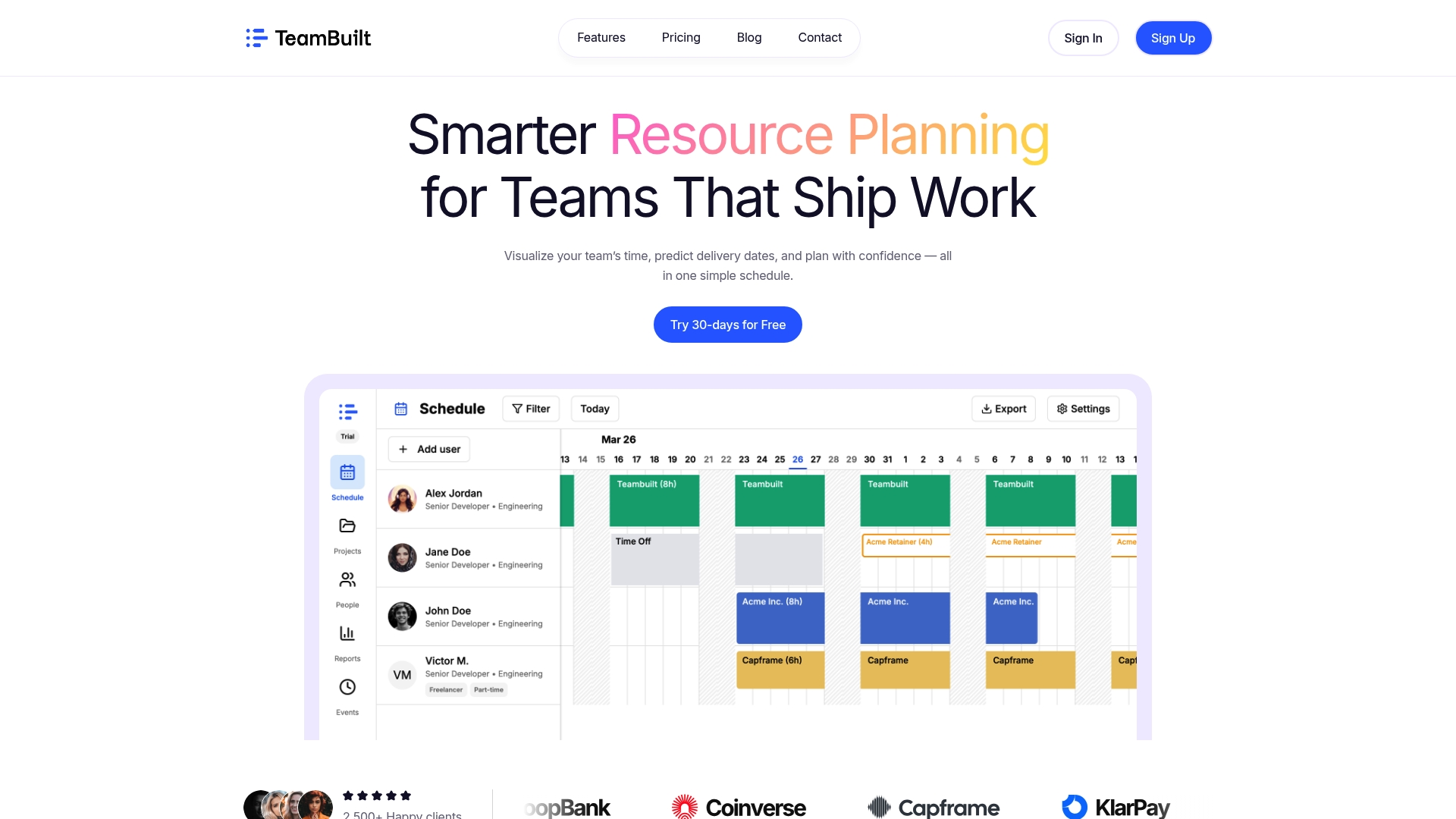
Ready to transform your resource management and team coordination? Visit TeamBuilt now to explore how our solution is tailored for project managers, operations leads, CTOs, CFOs, and HR professionals. Take the next step towards operational agility and let your teams thrive with clear visibility and accurate forecasting.
Frequently Asked Questions
What are the main features to look for in alternatives to teamzo.webflow.io?
When searching for alternatives, prioritize features like project management capabilities, real-time collaboration tools, and resource planning functions. Evaluate each option’s ability to visualize team availability and track project timelines.
How can I decide which teamzo.webflow.io alternative suits my team best?
To determine the best alternative, assess your team’s specific needs such as size, project complexity, and workflow. Create a list of essential features and compare how each option aligns with your requirements, potentially reducing decision-making time by a week.
Are there any free alternatives to teamzo.webflow.io?
Yes, some alternatives offer free plans or trials that allow you to explore their features without commitment. Test a few options to identify which platform meets your team’s needs, ideally within a trial period of up to 30 days.
How do I migrate my data from teamzo.webflow.io to a new platform?
To migrate your data, export it from teamzo.webflow.io in a compatible format, then import it into your chosen alternative. Follow the import guidelines provided by the new platform to ensure a seamless transition without losing important information.
Can I use several teamzo.webflow.io alternatives together?
Yes, you can integrate multiple alternatives to optimize your workflows, especially if each serves a different purpose. Explore available integration features to connect these platforms and streamline processes, which can lead to improved efficiency across your team.
What criteria should I use when comparing pricing for teamzo.webflow.io alternatives?
When comparing pricing, consider features offered at each price point, scalability options, and any additional fees for integrations. This can help you make a well-informed choice, keeping costs predictable and scalable as your team grows.
Recommended