
Better team communication for faster project delivery



TL;DR:
- Effective team communication is crucial for timely decision-making, clarity, and preventing burnout. Overloading with messages hampers productivity; instead, clear norms and structured channels improve coordination and outcomes. Regularly revisiting communication practices ensures norms scale effectively as teams grow.
Project managers often operate on a hidden assumption: that more communication automatically leads to better outcomes. More Slack messages, more standup calls, more status update threads. But this instinct can quietly wreck delivery timelines and burn out even your strongest team members. The real lever isn’t volume. It’s clarity, structure, and timing. This guide breaks down what the research actually says about effective team communication, which practices genuinely improve coordination, and how to build communication habits that scale as your startup or agency grows.
Table of Contents
- Why effective team communication matters for project outcomes
- Common pitfalls: Why more chat isn’t always better
- Agile and balanced: Practices that actually boost team communication
- Metric-first feedback: Why dashboards aren’t a magic fix
- Making it actionable: How to set communication norms that scale
- The overlooked truth: Less can be more in project communication
- Scale your agency’s teamwork with Teambuilt
- Frequently asked questions
Key Takeaways
| Point | Details |
|---|---|
| Balanced participation | Equitable interaction is more valuable than sheer volume of messages. |
| Streamlined tools | Limiting communication platforms reduces confusion and decision delays. |
| Smart rituals | Agile practices and set meeting norms enhance clarity and engagement. |
| Metrics caution | Relying solely on live dashboards can backfire and reduce effective teamwork. |
| Actionable norms | Regularly revisiting and refining team norms sustains high performance. |
Why effective team communication matters for project outcomes
Team communication isn’t just a “soft skill” issue. It directly shapes how fast decisions get made, how well context moves between people, and whether your projects finish on time. For growing startups and agencies running multiple concurrent projects, poor communication creates a compounding problem. A missed update in week one becomes a rework conversation in week four.
Clear communication aligns everyone around priorities, surfaces blockers early, and shortens the feedback loops that slow delivery. When your team knows exactly who decides what, which channel carries urgent requests, and how often updates are expected, problem-solving speeds up dramatically. Teams stop waiting for clarity because the norms provide it.
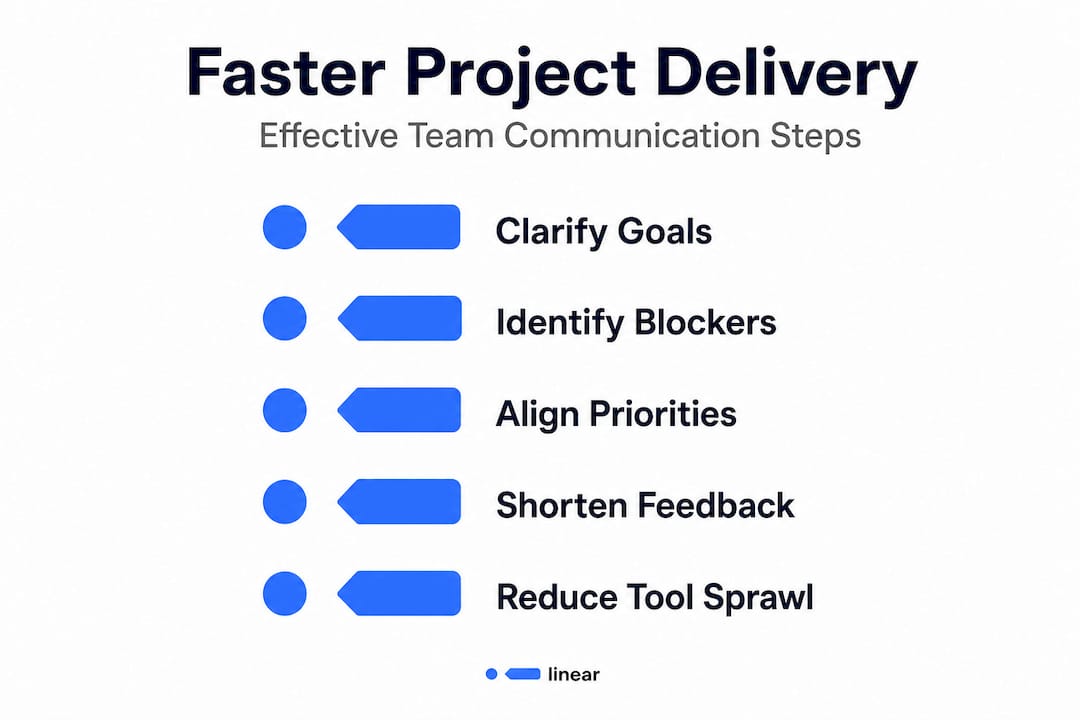
On the other side, poorly managed messaging creates a specific kind of pain that’s hard to diagnose. Information gets scattered. Context gets lost. People make decisions based on outdated assumptions because the relevant update was buried in a thread no one checks. This leads to bottlenecks, duplicated work, and a creeping sense of frustration that often gets mislabeled as a “motivation problem.”
The cost of business communication essentials being ignored compounds fast in agencies where clients expect predictable delivery. HBR research confirms that explicit communication norms are required to avoid burnout, inefficient onboarding, wasted time, and productivity loss. These aren’t abstract concerns. They show up in your sprint reviews, your client calls, and your team’s weekly pulse scores.
“The teams that move fastest aren’t the ones who communicate the most. They’re the ones who communicate precisely.”
A few signs your team’s communication norms are hurting delivery:
- Repeated questions in meetings that were already answered in writing
- Decisions made in side chats that don’t get documented or shared
- New hires taking weeks to understand where information lives
- Urgent and routine messages mixed in the same channel
If any of these sound familiar, the problem isn’t your people. It’s the structure. And structure is fixable. Understanding agency project workflows gives you a useful lens for mapping where communication breakdowns most often occur.
Common pitfalls: Why more chat isn’t always better
This is where most project managers get tripped up. The instinct when communication feels broken is to add something: a new tool, a new channel, a new daily check-in. But adding more often makes the problem worse, not better.
The core issue is communication tool sprawl, which fragments context across platforms and causes decisions to get lost. When critical information lives partly in Slack, partly in email, partly in a project tool, and partly in a shared doc, your team spends enormous energy just finding things. That’s coordination cost, and it scales badly as your agency grows.

Context-switching between tools is particularly damaging. Research consistently shows that every time someone shifts from one app to another, they lose momentum and take time to re-orient. A developer interrupted by a Slack ping while debugging loses more than the 30 seconds it takes to read the message. Rebuilding focus costs an average of over 20 minutes per interruption.
Here’s a comparison of reactive vs. intentional communication approaches:
| Approach | Volume | Clarity | Team impact |
|---|---|---|---|
| Reactive (add more tools/channels) | High | Low | Context fragmentation, burnout |
| Intentional (structured norms) | Moderate | High | Faster decisions, less rework |
| Silent (no norms at all) | Low | Very low | Information silos, missed handoffs |
The steps that separate intentional communicators from reactive ones:
- Audit your current channels. Map out every place your team exchanges information, including informal ones.
- Identify where critical decisions get made. If it’s not documented, it didn’t happen for the next person who needs context.
- Find the high-noise, low-signal channels. These are the ones burning attention without moving work forward.
- Consolidate and assign purpose. Every channel or tool should have a clear job to do.
- Announce the change to the whole team. Norms only work if everyone understands and agrees to follow them.
Pro Tip: Don’t kill tools cold turkey. Give your team a two-week transition where both old and new systems run in parallel, then review what actually stuck.
Efficient real-time collaboration doesn’t mean constant availability. It means making the right information accessible at the right moment. For dynamic team environments where roles shift between projects, this distinction becomes even more important. You can also sharpen your team’s individual habits by exploring improving team communication skills at the individual level alongside your structural changes.
Agile and balanced: Practices that actually boost team communication
Evidence-based practices matter here because the options are endless and most of them sound reasonable. The question is: what actually moves the needle on team coordination and delivery?
One of the more surprising findings comes from research on agile coordination techniques. Studies show that planning rituals improve participation balance across team members, even when they don’t significantly change total talking time or attention spans. In other words, it’s not about who speaks the most. It’s about whether the right voices are heard at the right moments.
Planning poker is a classic example. By asking every team member to independently estimate effort before the group discusses, it prevents dominant voices from anchoring the conversation early. Junior team members are more likely to raise concerns when they vote simultaneously rather than waiting to see what a senior engineer says first. That one structural change can unlock important information that would otherwise stay hidden.
Here’s how different practices compare on key dimensions:
| Practice | Participation balance | Decision speed | Async-friendly |
|---|---|---|---|
| Planning poker | High | Moderate | No |
| Written async updates | Moderate | Fast | Yes |
| Daily standup (time-boxed) | Moderate | Fast | No |
| Open brainstorm meetings | Low | Slow | No |
| Structured retrospectives | High | Slow | Partially |
The practices that consistently show up in high-performing teams:
- Time-boxed meetings with explicit agendas sent at least 24 hours ahead
- Rotating facilitation so no single person controls the floor every time
- Written decision logs attached to project records, not buried in chat
- Async-first by default with clear escalation paths for urgent issues
- Regular retrospectives focused on process, not just project outcomes
Pro Tip: The facilitator role is often assigned by seniority. Try rotating it to less senior team members. You’ll get fresh perspectives and develop communication skills across your whole team at the same time.
For guidance on coordinating teams effectively across multiple projects, the structure of your planning rituals matters as much as the tools you use. Planning templates for teamwork can help you standardize these rituals without spending hours designing them from scratch. For productive business meetings, the agenda structure you use is often more powerful than the meeting format itself. You can also find proven workflow examples that show how high-output teams structure their communication cadence.
Metric-first feedback: Why dashboards aren’t a magic fix
Somewhere along the way, the idea took hold that if you can measure collaboration, you can fix it. Real-time dashboards showing response times, message volumes, and meeting attendance feel actionable. They look great in management reviews. But the evidence on whether they actually help is sobering.
Research shows that real-time collaboration feedback may fail to improve team performance and can actually make it worse. When teams know they’re being monitored in real time, behavior shifts in ways that optimize for the metric rather than the outcome. You get faster responses that are less thoughtful. You get more messages that say less. You get meeting attendance that masks disengagement.
“Metrics should inform reflection, not replace judgment. A dashboard that measures ‘messages sent’ tells you nothing about whether the right information reached the right person.”
A better approach to using data in team communication:
- Schedule periodic reviews instead of live monitoring. A weekly or biweekly look at communication patterns gives teams time to reflect and adjust without feeling surveilled.
- Pair quantitative data with qualitative check-ins. Ask your team directly: “Is there information you’re not getting that you need?” Numbers rarely tell that story.
- Focus metrics on outcomes, not activity. Track delivery predictability, blocker resolution time, and handoff quality rather than message volume.
- Use data to open conversations, not close them. If your metrics flag a problem, start a discussion rather than issuing a directive.
Real-time team coordination tools are genuinely useful when they show you capacity and workload rather than surveillance-style activity logs. Understanding how to read team performance metrics in context is what separates a project manager who uses data well from one who drowns their team in reports. Thoughtful collaboration time savings come from removing friction, not adding monitoring layers.
Making it actionable: How to set communication norms that scale
All of the above is interesting but useless without a way to actually implement it. Communication norms are the infrastructure your team runs on. And like any infrastructure, they need to be intentionally designed, not assembled by accident.
Explicit communication norms prevent the most common and costly problems: burnout from constant pings, onboarding confusion, wasted time in wrong channels, and productivity loss from unclear expectations. Here’s what building them looks like in practice:
- Define channel purpose clearly. Slack for quick questions and social updates. Email for external stakeholders and formal records. Your project tool for task-related discussion and decisions. No exceptions.
- Set explicit response expectations. Async messages don’t need a reply within five minutes. Define what “urgent” means and what channel to use when it applies.
- Create a decision log habit. After any significant decision is made (in a meeting, a call, or a chat), the person who made it writes a one-paragraph summary in your project tool.
- Build in communication reviews. Not just at project close. Schedule a mid-project check-in specifically to ask: “Are our communication norms still working?”
- Onboard new team members with a communication guide. A one-page doc that covers your channels, expectations, and escalation paths saves weeks of confusion.
Pro Tip: When you write your communication norms, include the “why” next to each rule. Teams follow norms far more consistently when they understand the reasoning behind them.
As you scale, revisit your norms after every significant team change, whether that’s new hires, new clients, or new tools. The norms that work for a team of six often break down at fifteen. Optimizing dynamic teams means treating your communication structure as a living document, not a one-time setup.
The overlooked truth: Less can be more in project communication
Here’s something we’ve seen consistently across teams at different growth stages: the highest-performing project teams are rarely the most communicative ones. They’re the most deliberate ones.
When you try to track everything in real time, you create a system where everyone is always half-listening. Managers monitor dashboards. Team members field pings between deep work. Decisions get crowdsourced through chat threads rather than made by the people responsible. The result looks like coordination but functions like noise.
The teams that deliver fastest have usually done something counterintuitive: they’ve reduced how often they communicate and increased how much each communication actually carries. They’ve drawn sharp lines around what requires a meeting versus what deserves an async message versus what doesn’t need a response at all. Looking at workflow examples for SMBs that have scaled successfully, the pattern is consistent. Less frequent but higher-quality touchpoints outperform constant low-signal contact.
This isn’t about being distant or disorganized. It’s about respecting attention as a resource. The project managers who make this shift report something interesting: their teams feel more connected after communication is tightened, not less. Because every interaction carries more meaning.
Scale your agency’s teamwork with Teambuilt
You’ve worked through the evidence and the frameworks. Now the question is how to bring these practices to life without creating another layer of manual work.
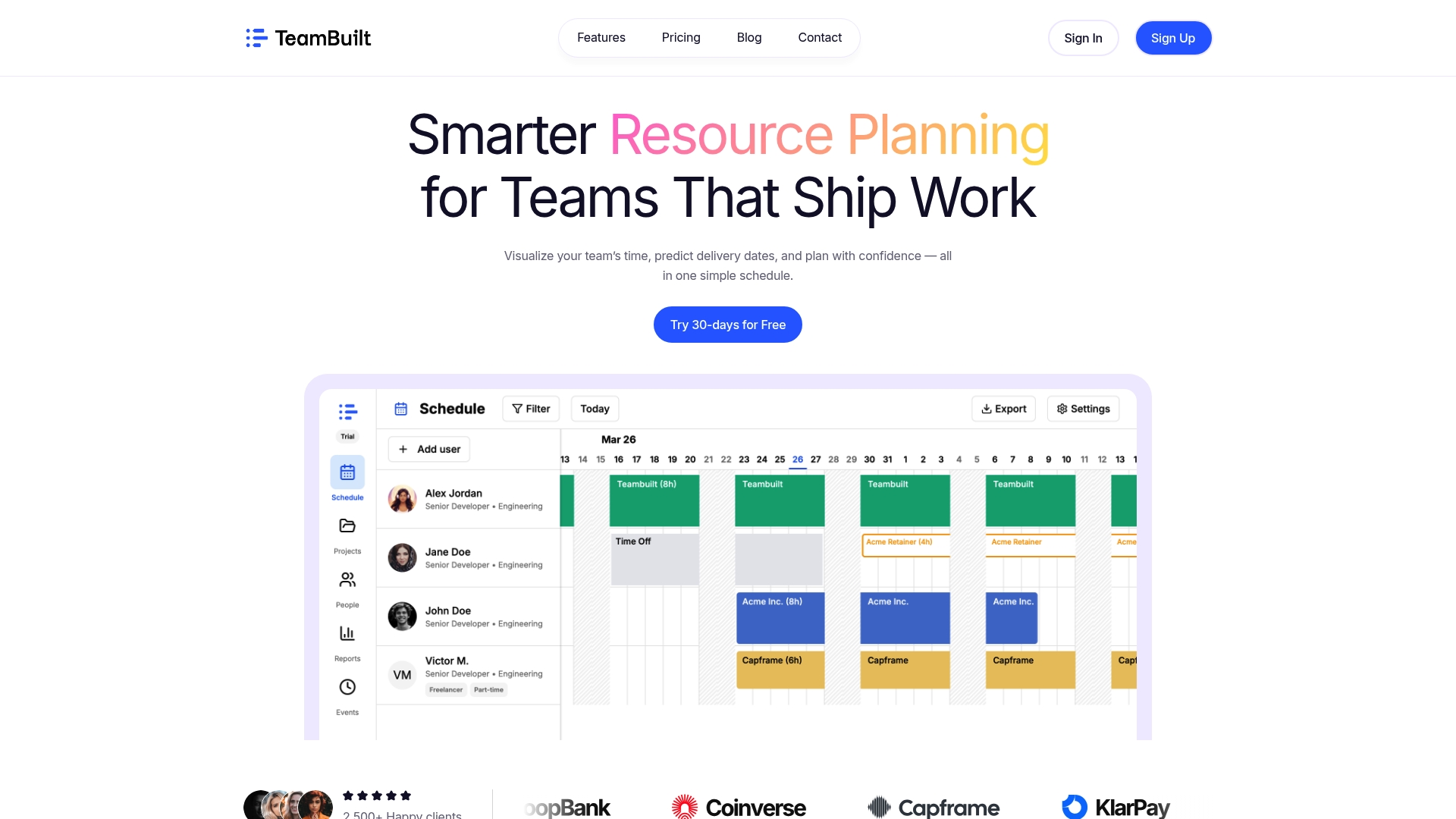
TeamBuilt centralizes your team’s resource planning, scheduling, and project coordination in one place, so communication norms are backed by real visibility rather than hope. Instead of chasing updates across tools, your team sees workload, capacity, and project timelines in a single shared view. Explore Teambuilt’s features to see how the platform supports cross-team coordination, reduces communication overhead, and helps project managers make faster, better-informed decisions. Start your free trial and move from building norms on paper to running them inside a platform that was designed for exactly this kind of work.
Frequently asked questions
What makes team communication vital in project management?
Effective team communication prevents delays, avoids misalignment, and keeps project goals clear for all members. Research confirms that explicit communication norms are essential to prevent burnout, onboarding failures, and productivity loss.
How can project managers avoid communication overload?
Set clear guidelines for channel use and favor focused, intentional updates over constant messaging. Communication tool sprawl fragments context across platforms, so consolidating and setting norms is the most effective fix.
Are real-time collaboration dashboards always beneficial?
No. Real-time metrics can sometimes hurt collaboration by shifting team behavior toward optimizing for the metric rather than the actual outcome.
What’s one proven way to improve participation in distributed teams?
Adopting agile rituals like planning poker helps create more balanced participation. Research shows agile coordination techniques improve participation balance even without significantly increasing total communication time.
How often should team communication norms be revisited?
Review norms regularly, especially after major team or process changes. Explicit norms require ongoing updates to remain effective as teams scale and workflows evolve.
Recommended