
Boost Team Productivity: 5 Proven Workflow Examples for SMBs

TL;DR:
- Choosing the right workflow improves productivity and reduces cycle times for SMBs.
- Kanban, Agile sprints, approval chains, and centralized scheduling each serve different team needs.
- Hybrid workflows, combining methods, offer the most flexible and efficient approach for growing teams.
Picking the right workflow for your team feels like choosing a route through a city you’ve never visited. Every option looks viable until you’re stuck in traffic. For growing startups and SMBs, the stakes are real: wrong workflow choices waste hours, create bottlenecks, and frustrate talented people. But the right system changes everything. Adopting proven workflow methods can slash cycle times by over 50% and increase throughput by nearly 60%. This guide walks you through five real workflow examples, backed by data, so you can pick the approach that actually fits your team.
Table of Contents
- How to evaluate team workflows: Criteria for SMBs
- Kanban boards: Visual workflow for cross-functional teams
- Agile sprints: Structured workflow for fast delivery
- Approval chains: Streamlining compliance and signoffs
- Centralized scheduling: Resource planning for distributed teams
- A smarter path: Why hybrid workflows outperform single-method systems
- Ready to streamline your team workflow?
- Frequently asked questions
Key Takeaways
| Point | Details |
|---|---|
| Clear criteria matter | Choosing workflows based on clarity, flexibility, and team needs ensures higher efficiency and less friction. |
| Kanban delivers results | Switching to Kanban can cut cycle times by half and boost throughput for busy teams. |
| Mix and match | Hybrid approaches that blend agile, approval chains, and scheduling outperform rigid single-system setups. |
| SaaS tools accelerate adoption | Modern platforms make it easy for SMBs to implement and iterate on best-practice workflows. |
How to evaluate team workflows: Criteria for SMBs
Before you adopt any workflow model, you need a clear-eyed view of what your team actually needs. Too many operations leaders jump straight to tools without asking the right questions first. That’s how you end up with a fancy Kanban board nobody updates.
Here are the core criteria every SMB should weigh when assessing a workflow:
- Transparency: Can everyone on the team see what’s happening, who owns what, and where things stand? Workflow clarity and transparency yield significant productivity gains and reduce status-update meetings.
- Automation: Does the workflow allow repetitive steps to run without manual input? Routing approvals, sending reminders, and updating task statuses manually is a productivity killer.
- Collaboration: Is the workflow designed for one team or multiple teams working together? Cross-functional work needs shared visibility.
- Scalability: Can this workflow grow with you? A system that works for 10 people often breaks at 30.
- Resource tracking: Does the workflow connect task completion to team capacity so you know who’s overloaded before deadlines get missed?
Smaller teams (under 15 people) often thrive with simpler visual methods like Kanban. Larger or more specialized teams usually need structured sprint planning or approval chains layered on top. Understanding the SaaS workflow benefits for your team size is a smart starting point.
Pro Tip: Resist the temptation to pick the most feature-rich tool. Pick the workflow method that creates the clearest shared understanding across your team, then find a tool that supports it.
Kanban boards: Visual workflow for cross-functional teams
Kanban originated in Toyota’s manufacturing plants in the 1940s and has since become a cornerstone of modern project management. Its power lies in one deceptively simple idea: make work visible.
Here’s how a typical Kanban workflow runs for a software or product team:
- Backlog: All tasks and requests start here, prioritized by the team lead.
- Ready: Tasks selected for the current work cycle move to this column.
- In progress: A team member picks up the task and begins work.
- In review: Work is checked for quality or accuracy by a peer or lead.
- Done: Completed and accepted tasks are moved here, giving the team a clear sense of progress.
The measurable impact of this method is significant. Teams using Kanban have recorded a 54% drop in cycle time and a 59% increase in throughput. For an SMB managing multiple simultaneous projects, those numbers translate directly into more work shipped with the same headcount.
“Kanban doesn’t just organize work. It exposes the bottlenecks you didn’t know existed.”
Kanban is an ideal fit for cross-functional SMB teams where designers, developers, and marketers share a project board. It works especially well when work arrives continuously rather than in fixed project phases. You can explore more workflow automation examples to see how Kanban pairs with automation rules.

Pro Tip: Set Work In Progress (WIP) limits for each column. If your “In Progress” column caps at 4 tasks per person, bottlenecks surface immediately instead of quietly killing your deadline.
Agile sprints: Structured workflow for fast delivery
While Kanban handles continuous flow, Agile sprints give teams a different kind of edge: structured momentum. A sprint is a fixed period, usually one to two weeks, during which a team commits to delivering a defined set of work. The time-box creates urgency without chaos.
Three roles anchor every sprint:
- Product owner: Prioritizes the backlog and decides what the team builds next.
- Scrum master: Removes obstacles and keeps the sprint running smoothly.
- Development team: Delivers the work.
Here’s how a standard sprint workflow unfolds:
- Sprint planning: The team selects work from the backlog that fits within capacity.
- Daily standup: A short sync (15 minutes maximum) where each person reports progress and blockers.
- Sprint execution: The team completes their committed work over the sprint window.
- Sprint review: Completed work is demonstrated to stakeholders for feedback.
- Retrospective: The team identifies what worked and what to improve next sprint.
Teams using visual, structured workflows report substantial delivery speed improvements, particularly when daily accountability is built into the process.
“Without a time box, work expands to fill whatever time is available. Sprints make that impossible.”
Agile sprints are best for product teams, engineering squads, or marketing teams running campaigns with defined deliverables. They require buy-in from everyone involved, so they’re less effective on teams where priorities shift daily. For distributed teams needing real-time coordination, combining sprints with a centralized scheduling tool makes a significant difference.
Approval chains: Streamlining compliance and signoffs
Not every workflow is about speed. In finance, HR, legal, and procurement, accuracy and accountability matter just as much as delivery time. That’s where structured approval chains earn their place.
An approval chain is a defined sequence of signoffs required before a task, document, or transaction moves forward. Without one, requests bounce between inboxes and get lost. With a structured chain, every step has an owner and a deadline.
Well-defined process steps and real-time status visibility drive productivity even in compliance-heavy departments. Here’s how approval times compare:
| Process | Without structured workflow | With structured workflow |
|---|---|---|
| Invoice approval | 6 to 10 days | 1 to 2 days |
| HR onboarding docs | 7 to 14 days | 2 to 3 days |
| Contract review | 10 to 20 days | 3 to 5 days |
| Procurement request | 5 to 8 days | 1 to 2 days |
Best practices for keeping approval chains fast and accurate:
- Assign a backup approver for every primary approver to avoid single points of failure.
- Set automatic escalation rules so stalled requests get flagged within 24 hours.
- Use a centralized real-time collaboration guide to keep all stakeholders on the same page during review.
- Standardize request formats so approvers have all the information they need upfront.
Modern SaaS platforms route requests automatically, notify the right people, and give everyone a live view of where an approval sits. Pairing this with solid resource allocation workflows ensures that approved work gets picked up immediately without gaps.
Centralized scheduling: Resource planning for distributed teams
As teams grow and projects multiply, scheduling conflicts become one of the biggest hidden drains on productivity. Two projects competing for the same senior engineer, a designer double-booked across campaigns, a sprint that launches without anyone realizing a key person is on vacation. It sounds trivial until it derails a deadline.
Centralized scheduling solves this by giving every project manager and team lead a single source of truth for who is available, when, and for how long. Tracking team capacity and project conflicts directly improves deadline adherence across the board.
Here’s a comparison of popular SaaS tools that support centralized scheduling workflows:
| Tool | Best for | Key feature | Pricing model |
|---|---|---|---|
| TeamBuilt | SMBs and agencies | Real-time capacity and workload view | Per user, monthly |
| Teamdeck | Agencies | Resource booking and timesheets | Per resource, monthly |
| Float | Creative teams | Visual timeline scheduling | Per person, monthly |
| Runn | Project-based orgs | Forecasting and utilization tracking | Per person, monthly |
Signs it’s time to move to centralized scheduling:
- More than two active projects compete for the same team members.
- Remote team members work across multiple time zones.
- Project managers rely on Slack messages or spreadsheets to check availability.
- Delivery dates are frequently missed due to unplanned resource gaps.
When evaluating scheduling tools, look for capacity visualization, conflict detection, integration with your project management system, and role-based access. Smart timeline management and disciplined team scheduling practices are the foundation of reliable delivery at scale.
A smarter path: Why hybrid workflows outperform single-method systems
Here’s what most workflow guides won’t tell you: committing exclusively to one method is itself a form of rigidity that will eventually slow you down. Every methodology has a ceiling.
Kanban is great for continuous work but lacks the commitment structure of sprints. Agile sprints drive velocity but can feel clunky for departments that need formal approvals. Approval chains are essential for compliance but tell you nothing about resource load.
The SMBs we’ve seen perform best operationally aren’t the ones who picked one framework and defended it. They’re the ones who combined methods deliberately. Marketing teams running Agile sprints with a Kanban-style content review board. Engineering teams using sprint planning alongside centralized scheduling to prevent resource conflicts. Finance departments layering approval chains on top of a shared capacity calendar.
Regular workflow reviews, every quarter at minimum, are what keep this approach from turning into chaos. You audit what’s working, what’s causing friction, and where a feature from another methodology could fill the gap. Real flexibility beats methodology dogma every time. For agencies and growing teams, reviewing scalable workflow strategies regularly is the difference between a workflow that serves you and one that constrains you.
Pro Tip: Start with one core workflow that fits your most common project type. Then, after 60 to 90 days, identify the one friction point that causes the most delays and pull in a complementary method to address it.
Ready to streamline your team workflow?
You’ve seen five concrete workflow models with real data behind them. The next move is putting them into practice with tools built to support exactly this kind of structured, scalable operation.
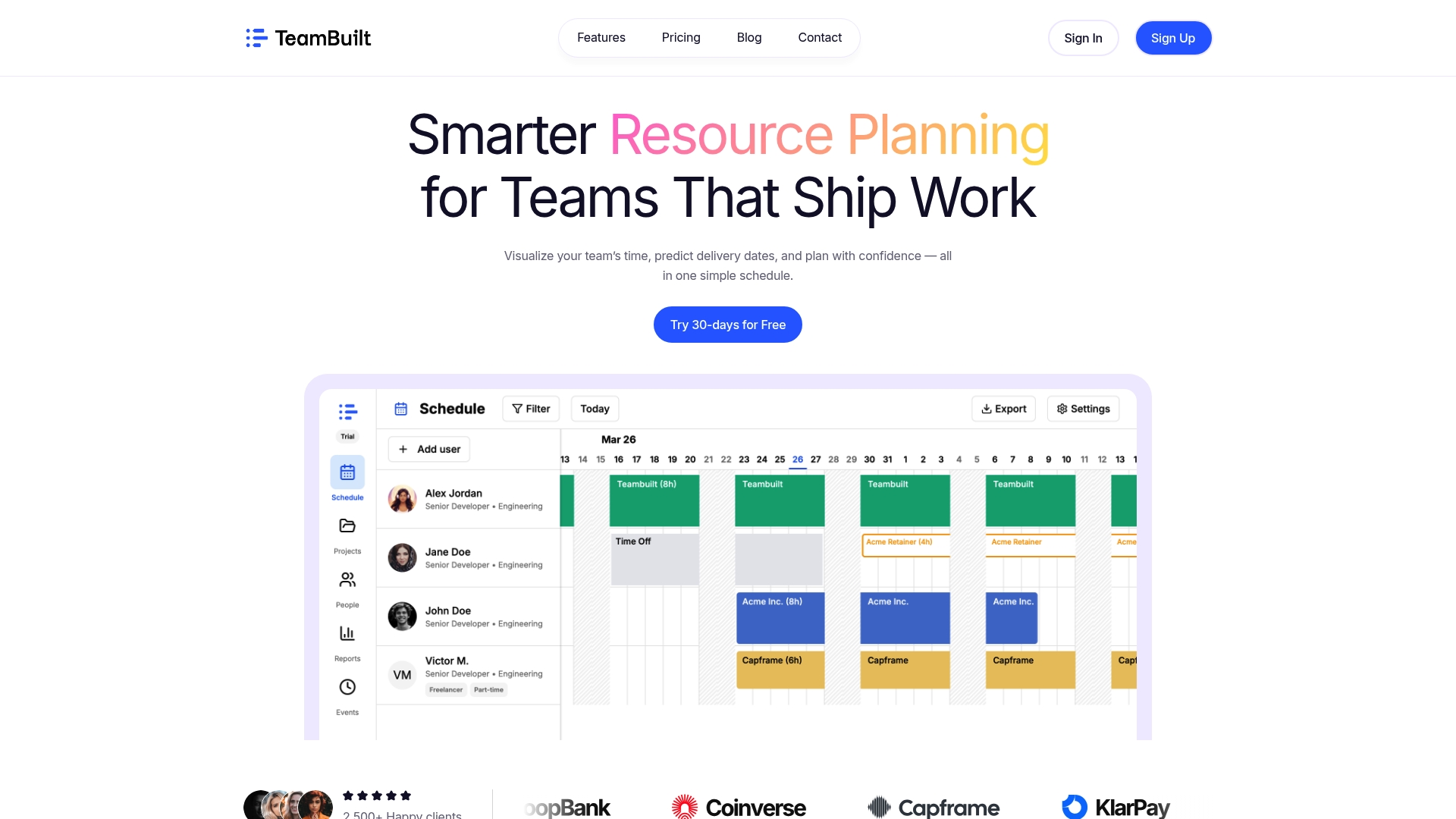
TeamBuilt is designed for teams like yours: growing SMBs and agencies that need real-time scheduling, workload visibility, and coordinated delivery across multiple projects and teams. Whether you’re implementing Kanban, running sprints, or managing approval chains, the TeamBuilt platform brings it all together in one place. Explore the full TeamBuilt features to see how centralized scheduling, capacity tracking, and cross-team coordination can replace your spreadsheets and scattered tools. Start a free trial and see the difference within your first week.
Frequently asked questions
What is a team workflow?
A team workflow is a defined process your team follows to complete recurring tasks and projects efficiently, using clear roles, steps, and tools. It reduces guesswork and keeps everyone moving in the same direction.
Which workflow is best for a remote or distributed team?
Centralized scheduling and Kanban boards excel for distributed teams due to real-time coordination and visibility. Tracking capacity and conflicts helps remote teams stay aligned on priorities and deadlines without constant check-ins.
How does Kanban improve team performance?
Kanban reduces average cycle time by 54% and increases work output through visual task management and work-in-progress limits. It makes bottlenecks visible before they become missed deadlines.
How can SMBs switch from spreadsheets to specialized workflow software?
Start with workflow templates and migrate one process at a time, using built-in integrations for gradual adoption. Picking a single high-friction workflow to move first makes the transition manageable and shows quick results.
Recommended