
Why Track Project Milestones: A Guide for Project Managers


TL;DR:
- Tracking project milestones provides a clear, binary view of progress, enabling better risk management and accountability. Well-defined milestones improve completion rates and facilitate early issue detection, ensuring timely project recovery. They serve as crucial decision points, guiding project governance and enhancing stakeholder communication.
A project milestone is a zero-duration checkpoint marking a significant achievement or decision point in a project, and tracking these checkpoints is the single most reliable way to maintain control over delivery. Unlike tasks, milestones carry no duration and no percentage complete. They are either achieved or they are not. That binary precision is exactly why project managers who understand why track project milestones matters gain a structural advantage over those who rely solely on task lists or Gantt charts. PMI’s 2024 Pulse of the Profession report found that 47% of projects fail to meet original goals, with poor schedule management among the leading causes. Milestone tracking addresses that failure mode directly.

What are the primary benefits of tracking project milestones?
Milestone tracking delivers benefits that task tracking alone cannot replicate. The most immediate is visibility. A milestone chart shows every stakeholder, from the project manager to the executive sponsor, exactly where the project stands against its most critical delivery points. That clarity replaces status meetings filled with ambiguous progress percentages.
The second benefit is accountability. When a milestone has a named owner and an explicit due date, responsibility is unambiguous. Assigning ownership to milestones improves accountability and triggers escalations while recovery is still possible. Without that named ownership, delays tend to surface late, when options for recovery are limited.
The third benefit is a measurable lift in project outcomes. Projects with clearly defined milestones have completion rates roughly 20% higher than those without active milestone management. That gap reflects the difference between teams that know when they are off track and teams that find out too late.
Additional advantages of milestone tracking include:
- Governance support. Milestones create natural phase gates where sponsors and steering committees can review progress and authorize continuation.
- Stakeholder communication. Milestone-centered updates focus on what has been achieved and what comes next, replacing lengthy task-level reports with clear, decision-ready summaries.
- Early risk detection. A slipping milestone signals a problem weeks before a deadline is missed, giving the team time to act.
- Reduced ambiguity. Binary status (achieved or not) removes the gray area that plagues percentage-complete reporting.
Pro Tip: Link every milestone to a named owner at the point of project planning, not after the first status review. Ownership assigned retroactively rarely carries the same accountability weight.
How does milestone tracking enable better risk management and recovery?

Risk management is where the importance of project milestones becomes most operationally concrete. A milestone functions as a decision gate. When a team approaches a milestone and confidence in meeting it is low, that is the moment to act, not the day the deadline passes.
The contrast between discovering a risk at a milestone versus discovering it at a task level is significant. Task-level delays are often absorbed silently within a sprint or work package. A missed milestone, by contrast, is visible to the entire project team and its sponsors. That visibility creates pressure to escalate and resolve rather than defer.
Effective risk management through milestone tracking follows a clear sequence:
- Assign a named owner to each milestone. Without ownership, there is no single person responsible for raising the alarm when confidence drops.
- Conduct milestone forecasting at each status cycle. Assessing the probability that upcoming milestones will meet their planned dates allows proactive intervention before slippage becomes a cascade.
- Define a recovery action plan for any milestone rated amber or red. The plan should specify what changes to scope, resource, or schedule are on the table.
- Escalate through the governance structure when recovery is not achievable within the team. Milestones provide the natural trigger point for that escalation.
“Early detection at milestones is more recoverable than day-of discovery. The further a project travels past a missed checkpoint without intervention, the fewer options remain.” — Project Management Formula
The ability to monitor project timelines at these structured intervals is what separates reactive project management from genuinely proactive delivery. Teams that treat milestones as early warning signals consistently recover faster from disruption than those that treat them as reporting formalities.
What makes a good project milestone and how to track it effectively?
Not every date on a project plan qualifies as a milestone. A well-defined milestone maps to a meaningful delivery event, a decision point, or a handoff between phases. It does not exist simply to populate a status report.
The most common mistake project managers make is retrofitting milestones onto an existing task list for reporting purposes. Those milestones carry no real weight because the project plan was not built around them. Strong milestones drive the plan. They represent the moments where the project either advances or stops.
Frequency and distribution
A three-month project should contain at least three to four milestones spaced every four to six weeks on the critical path. Fewer milestones create blind spots between checkpoints. More milestones, particularly poorly defined ones, create review overhead without adding control.
Communicating milestone status
RAG status (Red, Amber, Green) applied to each milestone gives project managers and sponsors an immediate read on project health. A milestone chart surfaces the moments that matter and simplifies project control for leaders who do not need task-level detail. Executives consistently prefer milestone charts over full Gantt charts for exactly this reason.
Comparing milestone tracking tools
| Feature | Basic project management tools | Purpose-built milestone tracking |
|---|---|---|
| Milestone visualization | Limited, often buried in task views | Dedicated milestone chart or timeline view |
| Ownership assignment | Manual, often optional | Structured field with notification triggers |
| RAG status tracking | Rarely built-in | Native status indicators |
| Forecasting support | None | Confidence scoring and date forecasting |
| Stakeholder reporting | Manual export required | Automated milestone status reports |
Platforms like Asana and Atlassian’s Jira include milestone tracking features within their project views, though the depth of forecasting and RAG reporting varies. For teams managing multiple projects across departments, a project management tool built for cross-team visibility adds significant value over single-project trackers.
Pro Tip: Include milestone status as a standing agenda item in every steering committee meeting. Milestones that are never discussed in governance reviews tend to slip without consequence.
How does milestone tracking compare with other project progress methods?
The distinction between milestone tracking and task tracking is not just semantic. It reflects a fundamentally different level of project control.
Milestones are binary, zero-duration points unlike tasks, which carry duration and percentage complete. That binary nature eliminates the ambiguity that percentage-complete reporting introduces. A task at 80% complete could mean two days of work remain or two weeks. A milestone either happened or it did not.
Tracking milestones also aligns teams on critical achievements rather than granular activity. This distinction matters most in executive communication. A sponsor does not need to know that 47 of 112 tasks are complete. They need to know whether the design sign-off milestone was achieved and whether the integration testing milestone is on track.
| Tracking method | Unit of measure | Best for | Risk |
|---|---|---|---|
| Task tracking | Individual activities | Day-to-day team coordination | Loses strategic focus |
| Milestone tracking | Binary checkpoints | Progress reporting and governance | Too few milestones create gaps |
| OKR milestone key results | Outcome-linked deliverables | Strategic alignment | Output milestones dilute focus if overused |
| Gantt chart | Timeline of tasks and dependencies | Detailed scheduling | Overwhelming for stakeholders |
The advantages of milestone tracking over pure task management become clearest in multi-team environments. When several teams contribute to a shared delivery, task lists fragment across tools and owners. Milestones provide the shared reference points that keep everyone aligned on what matters. Milestone-centered updates focus on accomplishments since the last check and outlooks for the next, which is exactly the information cross-functional teams need.
One risk worth naming: overemphasizing output milestones at the expense of outcome milestones can turn a project tracker into a delivery checklist with no connection to business value. The best milestone frameworks mix delivery events with decision points that confirm the project is still solving the right problem. For a deeper look at how project timeline management connects milestones to delivery outcomes, the Teambuilt blog covers the mechanics in detail.
Key takeaways
Tracking project milestones raises completion rates, surfaces risks early, and gives every stakeholder a clear, unambiguous view of project health at the moments that matter most.
| Point | Details |
|---|---|
| Milestones are binary checkpoints | A milestone is either achieved or not, removing the ambiguity of percentage-complete reporting. |
| Named ownership drives accountability | Assigning a specific owner to each milestone triggers timely escalation and recovery while options remain. |
| Frequency matters | Space milestones every four to six weeks on the critical path to maintain oversight without review overload. |
| Milestone charts beat Gantt charts for executives | Milestone charts give sponsors the project health read they need without task-level noise. |
| Early detection is the core advantage | Spotting a slipping milestone weeks before a deadline preserves recovery options that day-of discovery eliminates. |
Why milestone tracking changes more than just your reports
I have reviewed dozens of project post-mortems across software delivery, infrastructure rollouts, and professional services engagements. The pattern that appears most consistently in failed projects is not a lack of planning. It is a lack of meaningful checkpoints. Teams had task lists. They had Gantt charts. What they did not have was a set of binary, owned, visible milestones that forced an honest conversation about progress at regular intervals.
The most underrated aspect of milestone tracking is what it does to team behavior, not just project reports. When people know a milestone is approaching and their name is attached to it, the work gets prioritized differently. That is not a management trick. It is a structural consequence of making ownership visible.
I have also seen the opposite failure: projects with too many milestones, most of them poorly defined, that became reporting theater. The team spent more time updating milestone status than doing the work. The fix is not fewer milestones. It is better ones. Every milestone should answer the question: “If this is not achieved, does the project stop or change direction?” If the answer is no, it probably should not be a milestone.
For agile teams, milestone tracking is not in conflict with sprint-based delivery. Milestones sit above the sprint level, marking the moments where incremental work accumulates into something meaningful enough to show a sponsor or make a go/no-go decision. The project delivery best practices that work in both agile and traditional environments share one trait: they treat milestones as governance tools, not just calendar markers.
— Dima
See how Teambuilt keeps your milestones on track
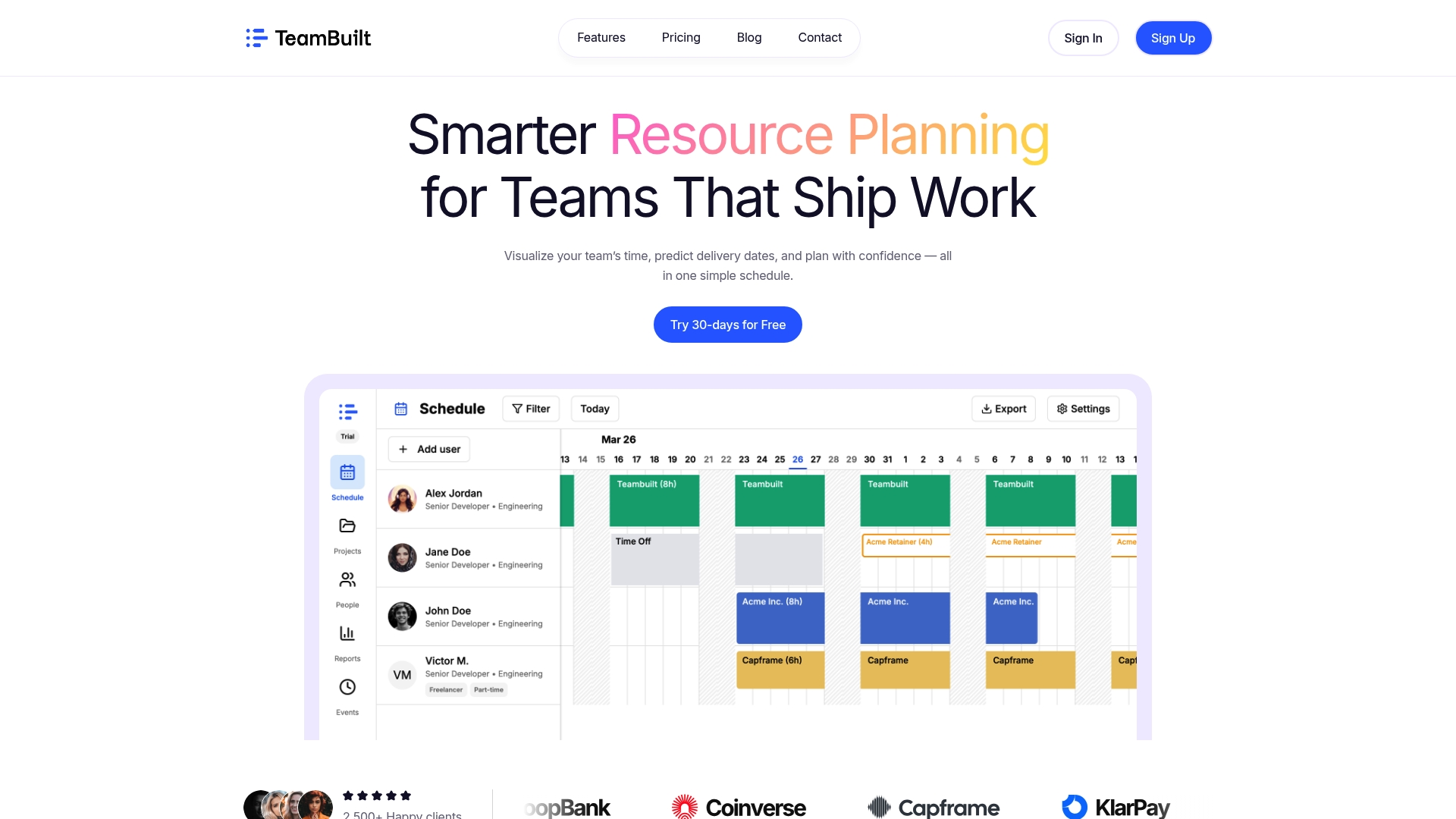
Teambuilt gives project managers and team leaders real-time visibility into milestone status across every active project. The platform connects milestone tracking directly to resource availability and team capacity, so you can see not just whether a milestone is at risk but why, and what it would take to recover. For SMBs and agencies managing multiple concurrent projects, that cross-team view replaces the scattered spreadsheets and disconnected tools that let milestones slip unnoticed. If your team is ready to move from reactive status updates to proactive milestone management, explore Teambuilt and see how centralized milestone visibility changes delivery outcomes.
FAQ
What are project milestones?
Project milestones are zero-duration checkpoints that mark significant achievements, decisions, or phase transitions in a project. Unlike tasks, they carry no duration and are either achieved or not, providing unambiguous progress signals.
Why does milestone tracking improve project completion rates?
Projects with clearly defined and actively managed milestones have completion rates roughly 20% higher than those without. Active tracking creates accountability and surfaces risks early enough to act on them.
How many milestones should a project have?
A three-month project should include at least three to four milestones spaced every four to six weeks on the critical path. Too few milestones create blind spots; too many create review overhead that slows the team down.
How is milestone tracking different from task tracking?
Task tracking monitors individual activities with duration and percentage complete. Milestone tracking monitors binary checkpoints tied to meaningful delivery events or decisions. Milestones provide the strategic view; tasks provide the operational detail.
What is the best way to communicate milestone status to stakeholders?
A milestone chart with RAG status applied to each checkpoint is the format executives and sponsors prefer. Milestone-centered status updates focus on what has been achieved and what is at risk, replacing task-level noise with decision-ready information.
Recommended